What Price Water?

LAR Headworks

A few months ago a friend and I were going down Forest Lawn Drive near Griffith Park. While she drove I was gazing out the window, and I was surprised to see a huge construction site spread out across the bed of the LA River. I hadn’t heard anything about a project planned for that area, and at first I was alarmed. What the hell were they doing to the river?

LAR Site Hills

After investigating a little, I found out that this was the Headworks Reservoir, and it involves the construction of two huge underground containers which will hold 110 million gallons of water. The idea is that when the project is completed it will provide drinking water to area residents who are now served by the Silverlake reservoir complex. In large part this effort was spurred by new rules handed down by the Environmental Protection Agency. Open reservoirs, like those in the Silverlake complex, are subject to contamination from many different sources. The Headworks project will comply with the new EPA rules and provide safe drinking water for thousands of Angelenos. Aside from improved water quality, the deal includes a 4-megawatt hydroelectric plant to provide more power for the city. And if that’s not enough, once the tanks are completed there are plans to turn the surface area into a park which would include riparian wetlands, bike paths and equestrian trails.

Sound cool? Well, the finished project probably will be pretty nice. The DWP had to find some way to comply with the new EPA standards. And the park/wetlands component will surely be a big improvement over the sterile concrete channel that exists now. But…

There are some questions about the cost of the project and the process that was followed to make it happen. The City of LA initially said the price tag would be $230 million. That figure has now risen to $319 million. Those who follow local news already know that the DWP has been accused more than once of scamming its customers. The fact that the tab for Headworks has gone up almost 40 percent is definitely troubling. There are also questions about why the City chose this option when there were other, cheaper proposals on the table. If you’re a DWP ratepayer, you’ll want to read Jack Humphreville’s breakdown of the project on CityWatch.

Is Headworks Project Another Example of Corruption?

For a general overview of the project, here’s a summary from the DWP.

Headworks Reservoir Fact Sheet

Bottom line, the project is happening. And I do believe it’s a good thing over all. But it bothers me to think that we’re getting ripped off by the DWP once again. I’m glad Garcetti is pushing for an audit of the agency’s shady non-profits, but I’d really like to see a full audit of the DWP. We deserve to know where our money is going.

LAR Concrete Horizon

Transit Tempest

MTA advertisement on Wilshire Blvd.

MTA advertisement on Wilshire Blvd.

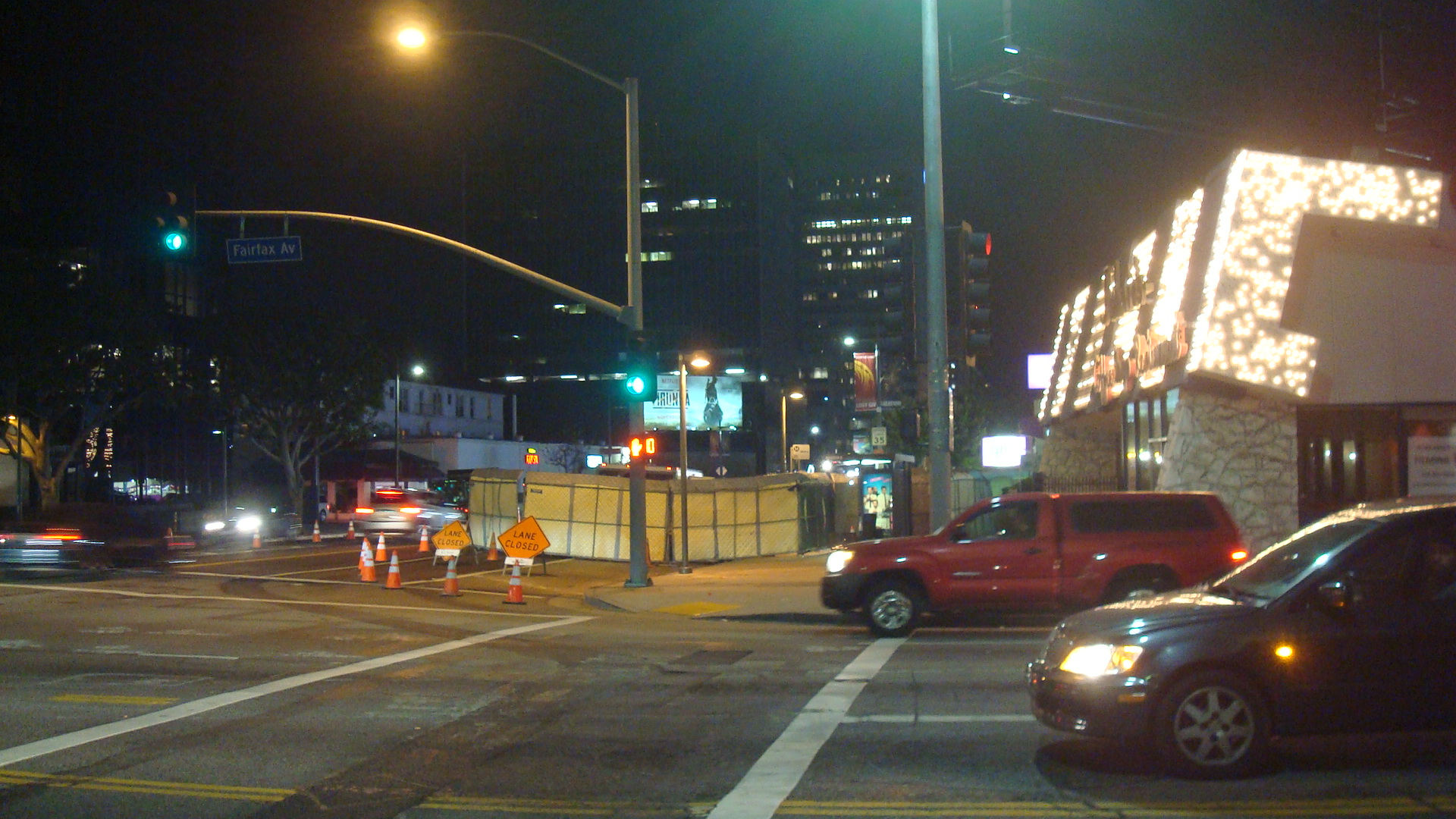
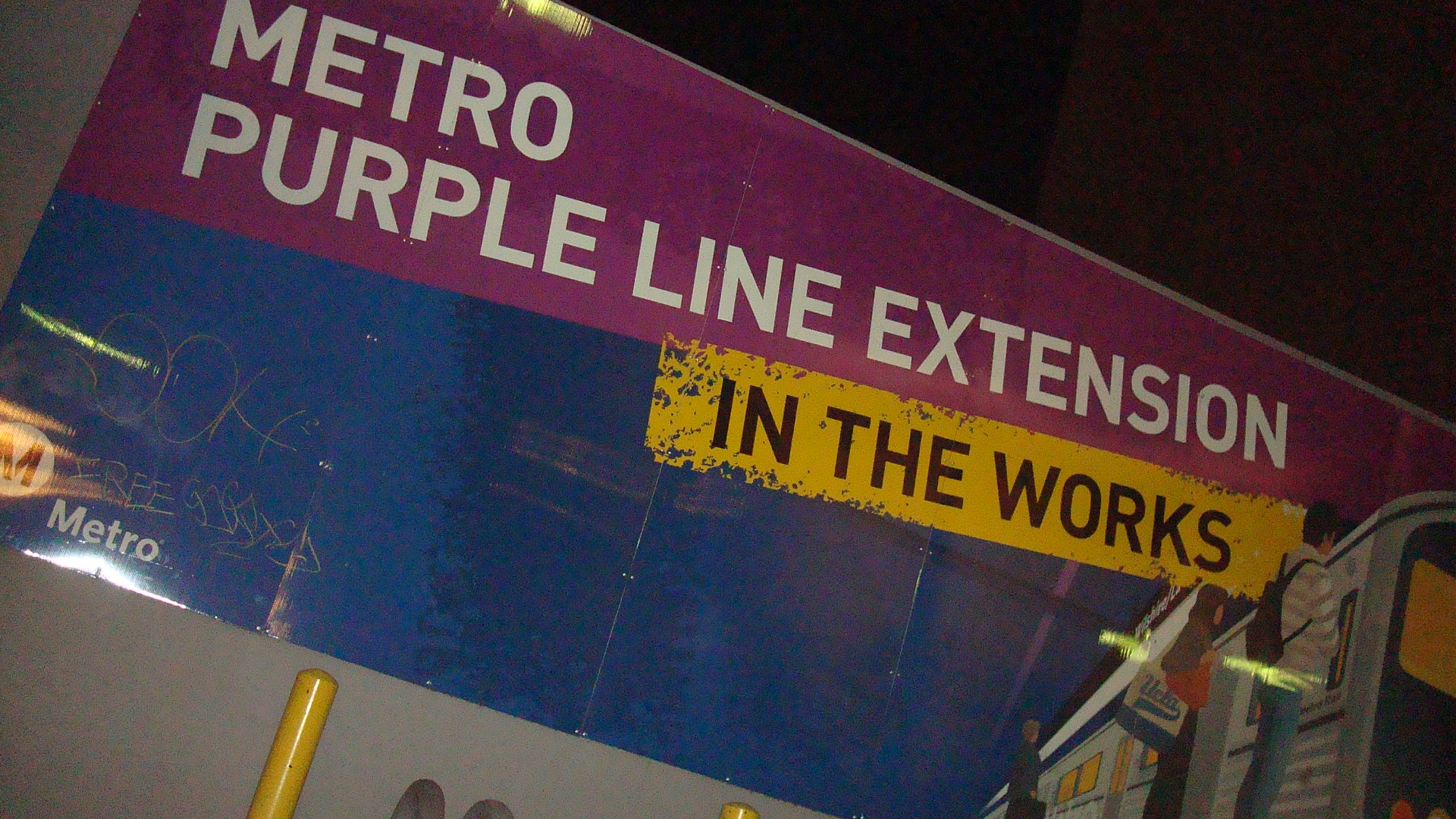
On Saturday the LA Times ran an article on the Purple Line extension that was real eye-opener for me. Let me say up front that I absolutely support the extension, and I’m glad the MTA is expanding our transit network. But I hadn’t realized how disruptive the construction would be, and I have to say I sympathize with the residents who are up in arms. They’re looking at years of noise, dust, traffic and general chaos. Even some of those who want to see the Purple Line go farther west are freaking out now that they’re realizing what it means for residents and businesses in the Wilshire Corridor.

If all goes well, the first phase of the project will be completed in nine years. That will only take the Purple Line to La Cienega. It will be over ten more years before it reaches its ultimate destination, the VA campus in West LA. I want to repeat the phrase “if all goes well”. Those of you who were around in the nineties will recall the mixture of disbelief and disgust that Angelenos felt during the construction of the Red Line, when stories about delays, cost overruns, incompetence and corruption appeared regularly in the news. The actual timeline for the Purple Line could easily end up stretching beyond current estimates, and I have no doubt it’ll cost way more than the MTA is telling us.

I am really glad the MTA is moving aggressively to expand our transit system, not just along this corridor but all over the county. I hope, though, that they’re letting residents know what they’re in for, and taking the time to listen to citizens’ complaints. The people who live along the Wilshire Corridor are going to be dealing with some real problems over the next two decades. The City of LA and the MTA need to do everything they can to minimize the disruptions.

Here’s the story from the Times.

Purple Line Construction

MTA construction site at Wilshire and Fairfax

MTA construction site at Wilshire and Fairfax

Old and New

DSC02587There were two things I’d been wanting to do for a while. The first was to visit the Natural History Museum to see their show on LA history. The second was to take some photos of the Sixth Street Bridge, which is slated to be demolished and replaced, although that may not happen for a while. So Tuesday morning I took the Red Line down to Seventh and Figueroa, where I transferred to the Expo Line. Pretty soon I was standing on the platform at the Exposition Park station.

It might have been twenty years or more since I’d been to Exposition Park. Walking toward the fountain at the center of the gardens was sort of like walking into the past. In part, that’s because of my memory of visiting the museums as a child. But also, the three buildings that border the park are massive reminders of the ornate, imposing architecture that was considered appropriate for museums a hundred years ago. In fact, the Natural History Museum is celebrating its one hundredth anniversary this year. Their web site offers a brief history, which you can read by clicking here.

The photo above shows the current entrance to the museum, which presents a modern facade. It’s an interesting contrast to the NHM’s original entrance, which is what you see in this next photo.

DSC02590

The exhibition I went to see, Becoming LA, was really good. The curators did a nice job of presenting the area’s multi-layered history, weaving together the threads of all the diverse groups that made the city what it is. Of course Becoming LA is just the latest in the recent onslaught of shows about Los Angeles. Local museums have been giving a lot of attention to the city in the past few years. I’m all in favor of highlighting LA’s art, culture, etc., but at times it seems like we’re crossing the line into bombastic self-promotion. Which, I guess, isn’t really that surprising.

After I was finished with the museum, I took the bus north on Vermont to Olympic, where I had to transfer. This put me right in the heart of Koreatown. There’s an interesting vibe in many parts of Koreatown, which I think has to do with the zillions of small businesses competing for your attention. There are numerous strip malls, and they all seem to be bursting with restaurants, karaoke bars, tech retail outlets, nail salons, etc.. Here’s one example….

DSC02609

But the look of Koreatown is changing. In the image below you’re looking up Vermont toward Wilshire, where you can see two high-rise towers that combine residential and retail. I understand some Koreatown residents aren’t too happy about the wave of high-density development that’s hitting their area. I doubt that bothers the City Council, though, and it certainly doesn’t bother Mayor Garcetti. They are all one hundred percent committed to serving the developers who put them in office. Click here for more info about this massive project.

DSC02625

The bus showed up and I got on. A few minutes later I got off at the end of the line, Sixth and Maple. I headed up Maple and over to Wall. As I was walking along, I heard a voice behind me.

“Excuse me. Are you a tourist?”

He must’ve seen the camera I was holding.

“No, I’ve lived in LA all my life.”

“Oh. Cuz I was just wondering if you knew this is a really horrible area.”

I laughed, but he had a point. The street was filled with people who were living on the sidewalk. The desperation was palpable. I can’t say I was really afraid, though. I spend a fair amount of time downtown, and I’ve walked through skid row now and again. If it was night, I probably would be worried. But in the harsh light of day, these people looked too beaten down, too demoralized, to be a threat.

We walked along together for a block or so. I told him I had the camera because I wanted to shoot photos of the Sixth Street Bridge. He knew the bridge was going to be replaced, but he felt it would be a long time before work actually started. Somehow we got talking about the LA City Council, and we both agreed they have absolutely no respect for the law. Interesting how the one thing that seems to bind Angelenos together is our absolute distrust of the people at City Hall.

Then we went our separate ways. I headed over to Little Tokyo for a bowl of udon and a beer. Then I started walking down Central to Sixth.

It was late afternoon. The streets were mostly deserted. There were few cars and fewer people. I walked past the Woori Market’s empty parking lot. It’s been closed for a while. There were large warehouses, like Los Angeles Cold Storage. A couple small restaurants. A lot of places have security fences, and a few were topped with barbed wire.

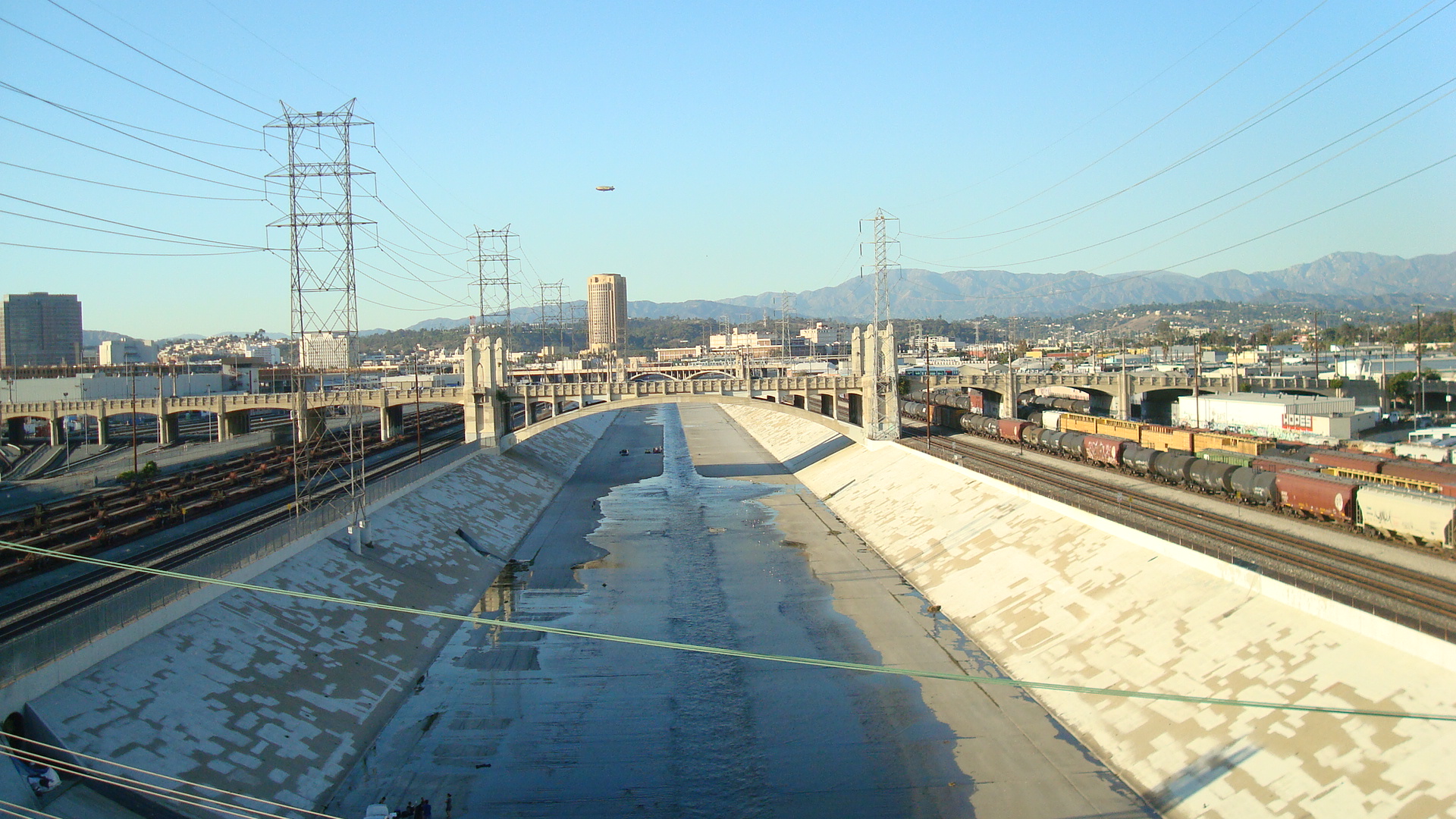
The bridge rises up over the warehouses and the railroad tracks. As you get near the mid-point, the landscape below stretches out for miles in every direction. Here’s a shot of the bridge looking back toward downtown.

DSC02655

And here’s another looking down on the LA River.

DSC02651

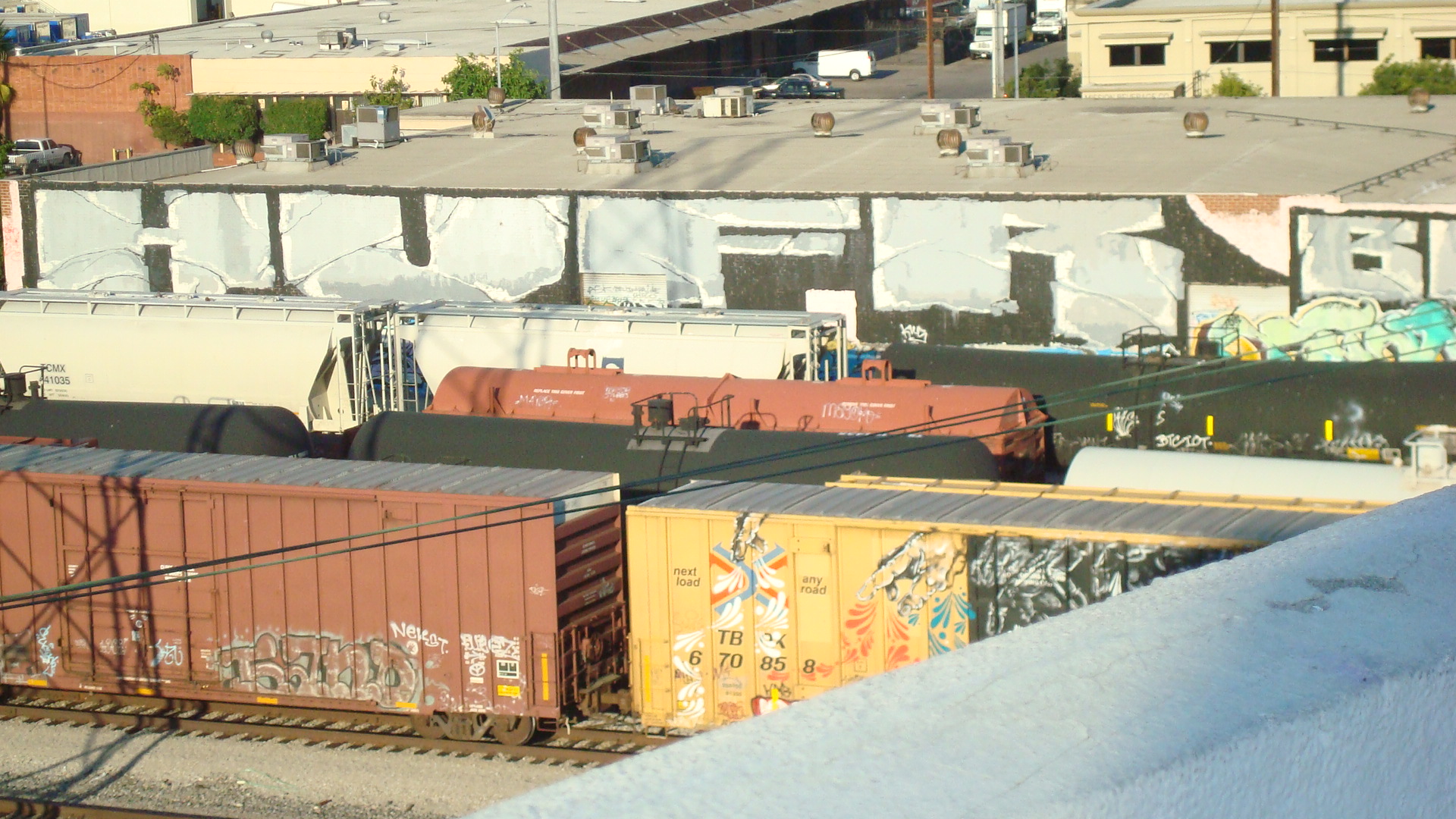
Freight cars covered with graffiti sit lined up below.

DSC02650

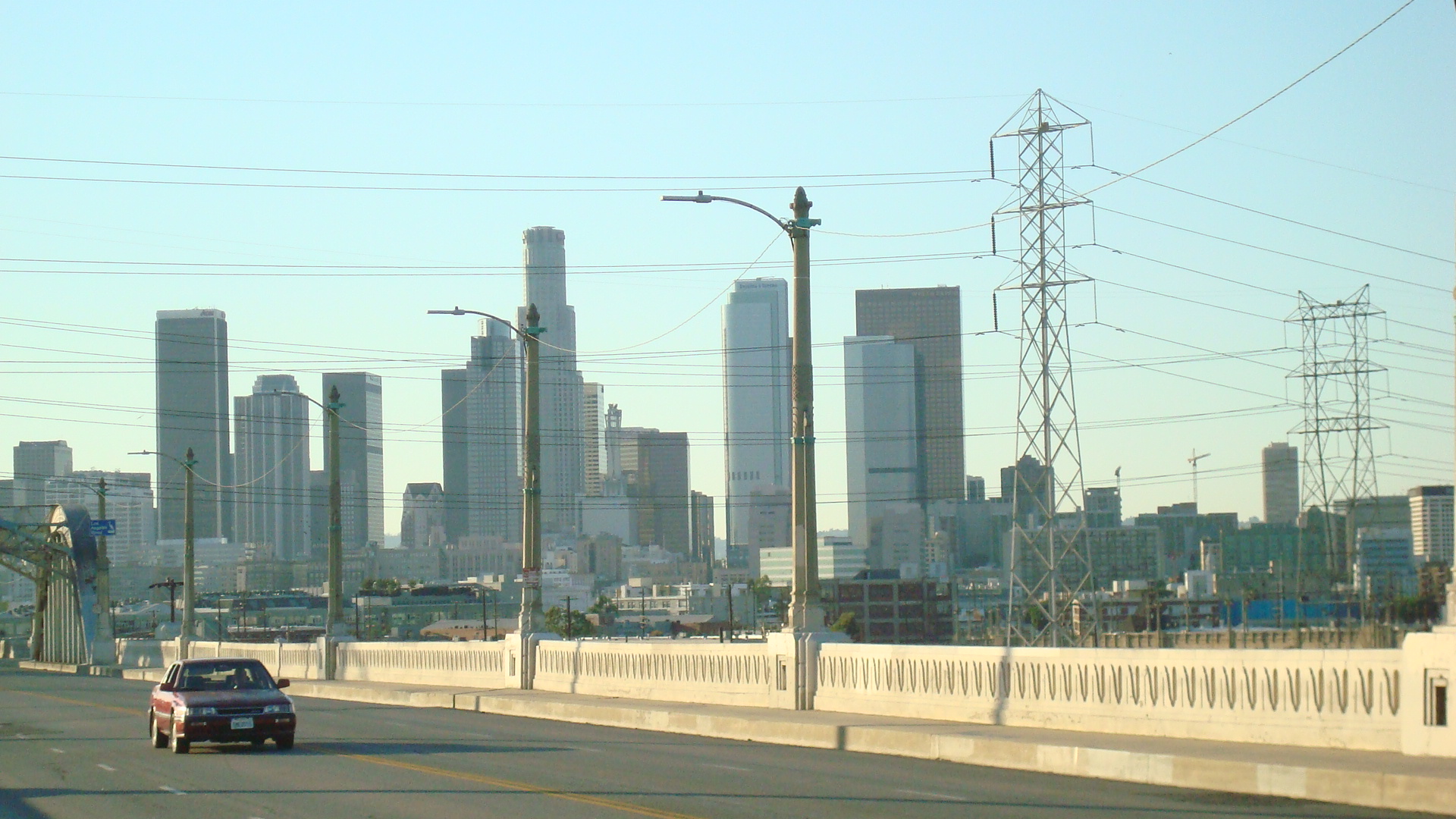
And here’s another shot of the downtown area.

DSC02666

On the other side of the bridge, Sixth Street becomes Whittier Blvd., which leads you into Boyle Heights. I waited for the bus in front of Carnitas Michoacán #3, which seemed to be doing steady business. And then the seven twenty showed up to take me home.

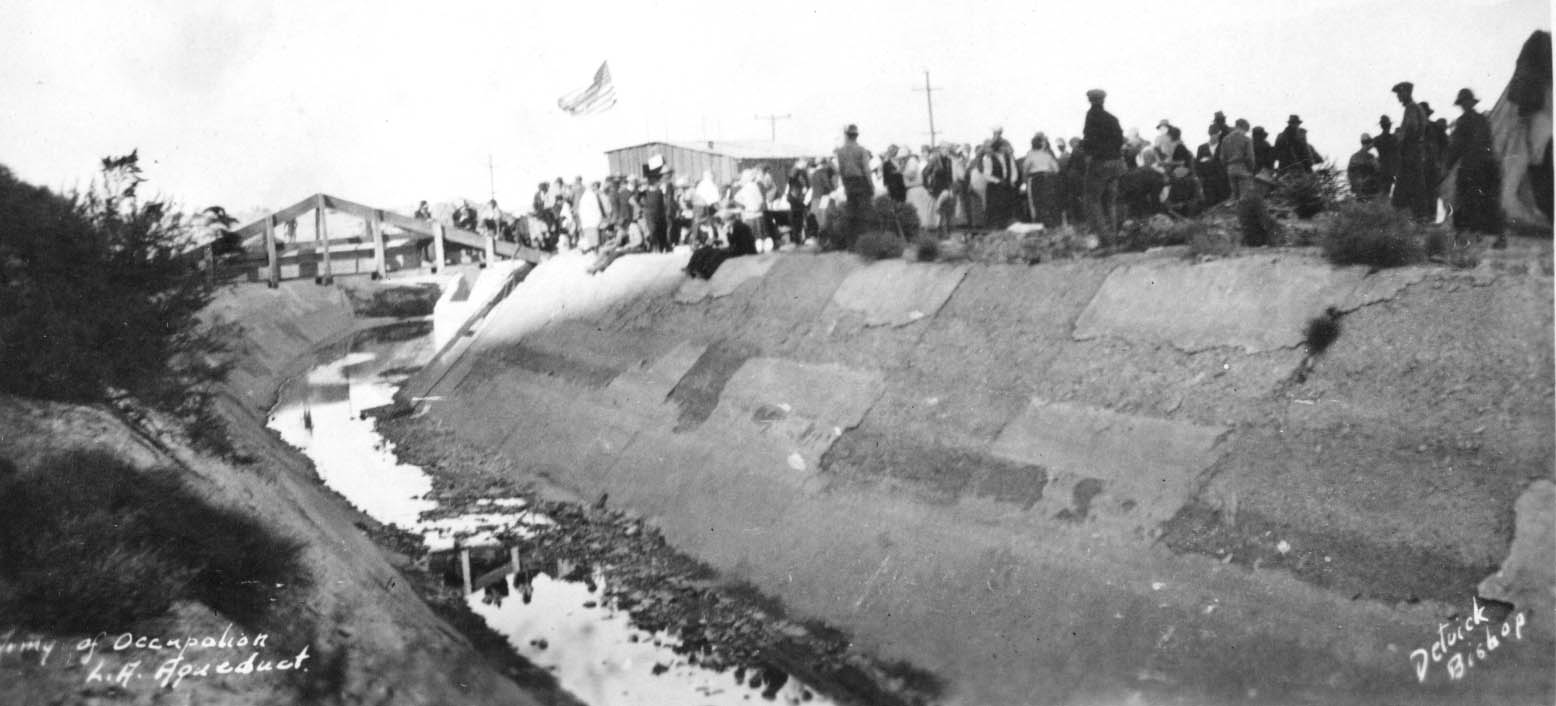
L.A. Aqueduct Centennial

aqueduct13

In case you haven’t heard, and I hadn’t until just recently, this year marks the one hundredth anniversary of the construction of the LA Aqueduct. This project was a major turning point in the city’s history. Without the water provided by the Aqueduct, LA never would have grown the way it did.

The LADWP has set up a web site as part of its effort to commemorate the Aqueduct’s centennial. It contains lots of interesting info, and lists numerous events that are tied to the celebration. Just click on the link below.

LA Aqueduct 100

The Devil Is in the Details

Aerial view of Regional Connector station at First and Alameda.

Aerial view of Regional Connector station at First and Alameda.

To show you how clueless I am, I hadn’t heard anything about the MTA’s proposed Regional Connector project until a few days ago. This is a major undertaking, and it has major implications, not just for the downtown area but for all of LA. Briefly, the purpose of the project is to link together the Gold Line’s Little Tokyo Station with the Red Line’s 7th & Metro Station, which could make things a lot easier for transit riders. For a more complete explanation, here’s a link to the Regional Connector page on the MTA’s web site.

MTA Regional Connector

And if you’d like to see what the completed project would look like, click the link below to see proposed designs, as well as maps laying out the location of the stops. I thought some of the comments were interesting, too. A lot of people are less than thrilled with the way the stations are laid out.

LA.StreetsBlog

As with any project of this size, there are pros and cons. Overall, I think the Regional Connector could be tremendously beneficial. But there are also potential problems, and three different groups are suing the MTA over the project. One issue is that a number of local businesses will be displaced. Even businesses that don’t have to worry about being demolished are very concerned about being able to function during construction. Many of these are family-run enterprises, and a significant loss of customers over a period of years could kill them.

I spent some time this morning checking out a number of articles on the Regional Connector, and often the comments were the most interesting part of the story. A lot of downtown residents are totally gung ho on this project. Many of them dismiss the concerns of the local businesses as though the owners are worrying over nothing. A few of the commenters are so angry about the lawsuits that they suggested a boycott of the businesses involved. I wonder how these commenters would feel if an enterprise they’d worked for years to establish was threatened with extinction.

I also wonder if the people who are so enthusiastic about this project remember the last time the city built an underground rail line. I’m referring to the construction of the Red Line, which ran way behind schedule and way over budget, and caused massive problems when they were tunnelling under Hollywood Boulevard. The street actually sank six inches during this period, and the digging also affected water lines. There was also evidence of massive corruption and sub-standard work by the contractors. Here’s a link to some of the comments posted at the LA Times during this period.

LA Times – Red Line Comments

I do think the Regional Connector could be really good for LA, but we have to show a healthy skepticism about any project of this size. The picture the MTA paints makes it all sound great, but there’s a big difference between creating digital renderings and actually getting it done. Don’t forget, they’ve burned us before.

A Faster Future

fiber 3

I am not a techie. When I started this blog what I had in mind was writing about the built environment, but more and more our cities are defined by technology. I had heard about Google possibly installing a fiber optic network in LA. This could allow area residents to download data with amazing speed, but at the moment it seems to be just speculation. Then I came across this article about Google making a deal with Austin, Texas to bring fiber optic to them.

PandoDaily – Google’s Fiber Takeover

The article makes some pretty broad claims about Google’s intentions. I was skeptical. So I sent the link to my nephew, Morgan, in Santa Cruz, who is a techie. Here’s an excerpt of what he had to say:

I’m not so sure Google is planning to takeover. They might, but only if they think they can significantly improve service. I think for them the ideal case is that the existing ISPs just upgrade their service, currently the problem is that all the ISPs have more or less realized it’s easier to just make incremental upgrades as opposed to laying new infrastructure. There’s been severe stagnation because ISPs have a lot of power. Because of that, US internet is way behind.

Google wants everyone to have high speed internet because that increases their ad revenue, but it probably doesn’t make much of a difference to them whose internet service it is. From what I’ve read, these services are likely breaking even at best, since it’s a lot more expensive for them to lay new infrastructure. Therefore, Google’s probably hoping that by threatening ISPs with this service, they’ll push them to lay new infrastructure so that Google won’t have to. If the ISPs don’t get with it, they might just end up taking over, but I doubt that’s really what they want to do.

He also sent me this link from Wired. The premise of the article is that government needs to get out of the way and let ISPs build what they want.

Wired – Don’t Blame Big Cable

I don’t buy all of the author’s arguments. The idea that government should just step back and let business take over is called into question by recent history. You can look at the Enron debacle in California, where the state’s Democratic legislature let the energy giant write its own ticket. Enron proceeded to steal billions of dollars from California consumers, and there are numerous other examples of this kind of abuse. But he gives an interesting breakdown of the challenges that companies have to face when dealing with city government.

Lastly, a brief article from Maximum PC about a small town that did install its own fiber optic network and is doing quite well.

Maximum PC – Small Town Triumphs

I have no idea where all this is going. My grasp of this stuff is pretty tenuous. But it seems clear that cities, especially major cities that want to attract business, will need to create this kind of tech infrastructure if they want to be competitive. The future is here.