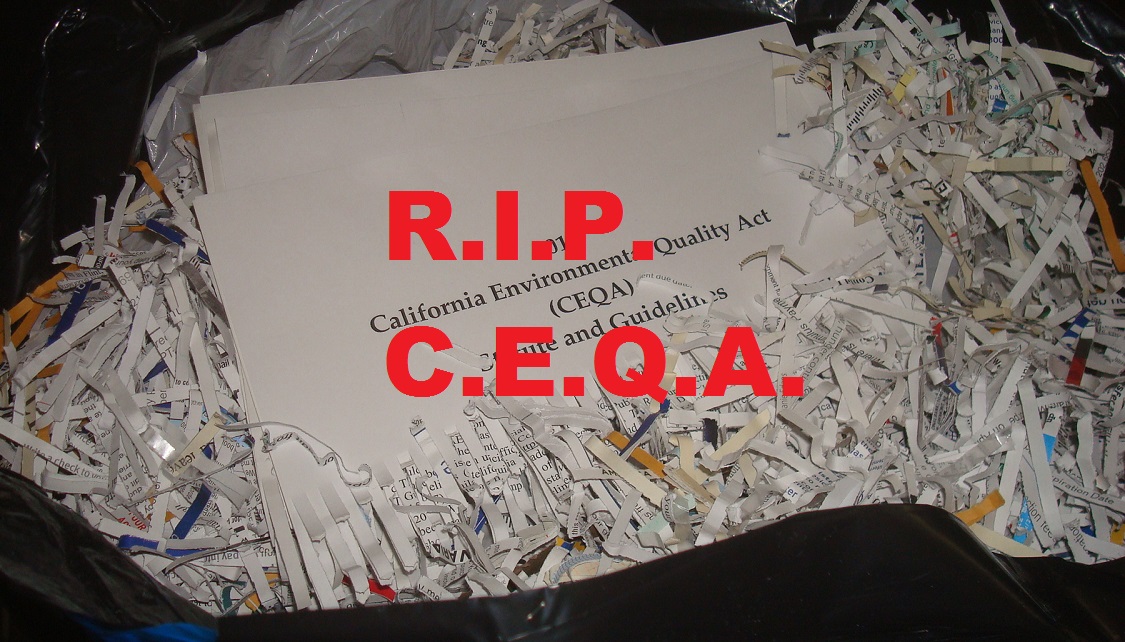
Last year Gov. Gavin Newsom strongarmed the State legislature into gutting the California Environmental Quality Act. Newsom told the legislature that he wouldn’t sign off on the State’s $321 billion spending plan unless they approved his “reforms”.
Many legislators were worried that the bill Newsom was pushing for, SB 131, would create a slew of exemptions from the California Environmental Quality Act (CEQA). While exemptions had already been created for housing and transit projects, SB 131 would allow exemptions for “advanced manufacturing” projects. These legislators were concerned because approval of the bill involved removing language from the State’s Public Resources Code that defined what could be considered an “advanced manufacturing” project. People in leadership said, don’t worry, we’ll fix this before the end of the session.
But of course, nothing got fixed. The definitions weren’t clarified. While there’s a push now in the legislature to clarify the definitions, it will be an uphill battle because well-financed business interests prefer the lack of clarity.
What kinds of “advanced manufacturing” projects might now be exempt from environmental review now that SB 131 has passed? Here’s a partial list from the web site Legal Planet.
aerospace manufacturing animal feed and organic fertilizer plastic bottle manufacturing semiconductor fabrication lithium ion batteries lithium recovery and processing rare earth materials production
Among the most concerning would be last four on the list. Making semiconductors involves the use of toxic materials such as arsenic and antimony, as well as toxic chemicals like sulfuric acid and hydrofluoric acid. Lithium processing involves the production of significant toxic waste, and many rare earth minerals are themselves toxic.
Would you be okay with one of these “advanced manufacturing” projects being approved in your neighborhood? If not, you might want to to contact your representatives in the State Assembly and the State Senate.
Graph from California Legislature’s report “Recent Legislative Actions to Increase Housing Production in California”
As has become usual over the past several years, the California legislature is considering a number of bills that would override local planning control and weaken environmental review for new development projects. Two of the most controversial bills are SB 79 and SB 607. SB 79, from State Senator Scott Wiener, would remove local zoning restrictions for housing projects proposed on sites near transit. SB 607, also from Senator Wiener, along with principal co-author Assembly Member Buffy Wicks, would essentially gut the California Environmental Quality Act (CEQA), giving local agencies broad latitude in deciding what level of environmental review was needed for a project, if any. (On May 19, both bills were placed in the Senate Appropriations Committee suspense file, which generally means a bill is on hold, but both are scheduled to be heard again by the Committee today, May 23.)
You probably won’t be surprised to hear that, while these bills have a long list of supporters, they’ve also generated major pushback from both individuals and established organizations. SB 79 is opposed by Public Counsel, the Public Interest Law Project, the Western Center on Law & Poverty, and numerous California cities. SB 607 is opposed by a number of environmental groups, including the Center for Biological Diversity, Sierra Club California and Friends of the LA River. (Full disclosure: I work with a group that has sent letters opposing both bills, United Neighborhoods for Los Angeles.)
This has turned into a routine. Every new session, state legislators present a number of bills designed to allow developers to build bigger and faster, with little or no environmental review. The legislators claim it’s the only way to solve the housing crisis. What’s unusual about this year is that Governor Gavin Newsom has upped the ante. As the efforts of citizens and organizations opposed to these bills seem to be having an impact on legislators, Newsom has come forward to say that he’s going to use the budget process to achieve the goal of speeding up new development. Like Wiener, Wicks and many others, Newsom sees the housing affordability crisis purely as a matter of supply and demand. They believe that housing prices will go down if they erase local planning authority and let developers build with little or no environmental review. It’s the classic supply-side economics argument. Unleash the free market, and it will solve your problems.
Unfortunately, the legislature has been unleashing the free market for years now, and it doesn’t seem to working. Take a look at the graph above. This is taken from a report produced by the State Senate and State Assembly Housing Committees. The report is titled….
California’s Housing Crisis: More Construction Is Needed to Meet the State’s Housing Needs
The paper was produced by the State Senate and Assembly Housing Committees. It argues that California has failed to produce enough housing for decades, and that lawmakers in Sacramento have been reversing this trend with the many bills that have been passed in recent years. They cite reforms to density bonus law, reforms to the Surplus Lands Act, faster approval timelines, and increases in “by-right” approvals. (When a project is approved “by-right”, it means an application is approved automatically, with no public hearings and no environmental review.) The text emphasizes large increases in the percentage of Low-Income and Very Low-Income units completed, and says there’s been a 61.5% overall increase in affordable housing production. That’s great, but the report doesn’t give numbers for rent-stabilized units lost during the same period, or the number of affordable units that converted to market-rate when their covenant expired, which means we don’t know if there’s really been a net gain.
And in spite of the report’s claims about increased housing production, the graph seems to show the opposite. By my count, the report lists 98 bills that were intended to spur housing growth over the last two decades. Things really kicked into high gear in 2017, when Sacramento passed 15 pieces of legislation related to housing. Looking at the lists compiled in the report, it appears that from 2017 through 2024 the Legislature approved a startling 87 bills to jump start housing. Based on the number of bills, if you accept the arguments that Wiener and friends are making, you’d expect housing production to go through the roof. But if we look at the chart above, you can see that the number of units permitted since 2017 is well below the number permitted during the first decade of this century. While it looks like there’s been a slight increase in multi-family units produced over that period, there’s been a huge drop in the number of single-family homes produced. The numbers look even worse if we go back to the 80s. The quantities of both multi-family and single-family homes produced in that decade are far higher than the quantities produced since 2017.
Which brings us to the question, What has this onslaught of legislation actually accomplished? Wiener and his pals have spent years pushing bills to override local zoning restrictions, and they’ve also been busy hacking away at the California Environmental Quality Act (CEQA). They argue that loosening local zoning and sidelining CEQA will spur new housing growth. But look at the numbers. Wiener and friends started their assault on local zoning and CEQA back in 2017. While the text of the report seems to be telling us that their campaign has been a resounding success, the graph the authors lead off with tells a different story. Housing production since 2017 is well below what it was in the 2000s, and it’s WAY below what it was in the 1980s. And it’s important to point out that in both of these earlier periods, local zoning was more restrictive than it is now, and CEQA was in full force. No doubt some will argue that the pandemic held down new construction, but California’s own housing dashboard shows that the number of permits issued actually increased during the crisis. (See slide 8 on the housing data dashboard.)
Newsom, Wiener, Wicks and their cohorts keep telling us that local zoning and environmental review are two of the biggest roadblocks to new housing. But given the numbers that we see in the Legislature’s own report, it seems these folks have no idea what they’re talking about. The graph they lead off with tells the story. California was producing more new housing before the Legislature began its attack on local zoning and environmental review.
Would you want these diesel trucks driving through your neighborhood?
How would you like to have hundreds of diesel trucks driving up and down your street, spewing diesel exhaust, 24 hours a day, 7 days a week? Residents living on Redondo Beach Boulevard in the Harbor Gateway area have been trying for years to stop a massive distribution center from being built right across the street from their homes, but it seems that no one at LA City Hall is listening.
Back in 2018 I posted about the LA City Planning Commission’s approval of this toxic project directly across the street from residents’ homes in the Harbor Gateway community. Developer Prologis had filed an application to build a 300,000+ sq.ft. warehouse which would generate hundreds of diesel truck trips every day, and would operate all night long. The LA Department of City Planning had allowed Prologis to slide by with low-level environmental review that didn’t begin to address the impacts. Thankfully the State’s then-Attorney General, Xavier Becerra, stepped in to let the City know that they weren’t doing enough to protect the residents’ health. The people who had been fighting the project were overjoyed, but it turns out the reprieve was only temporary.
Apartments right across the street from the proposed distribution center.
The Prologis distribution center is back, and will be heard again by the City Planning Commission on Thursday, May 8. Given the CPC’s record of approving pretty much everything that comes before them, it’s likely the project will again be given the green light. The folks at LA City Hall do not seem to care that the residents are already subject to vehicle exhaust from the nearby 110 Freeway. Nor do they seem to care that the area ranks in the top 5% for pollution burden and vulnerability according to the California Environmental Protection Agency’s screening tool. And apparently it makes no difference that, in addition to the residential buildings, the project site is surrounded by a public park, an LAUSD school, nursing homes, and two churches. This project will bring the trucks already travelling the freeway right into the neighborhood, and air pollution has been shown to have serious health impacts on children, adults and seniors.
Area residents will be showing up at the CPC meeting to voice their opposition. If you can make it down to City Hall, they’d appreciate your support. The meeting starts at 8:30 am, but it’s hard to say exactly what time the item will be taken up by the Commissioners.
If you can’t make it down, you can also submit comments to the following e-mail address.
cpc@lacity.org
Be sure to identify the project in the subject line.
Following up on my recent posts about funding for parks in the City of LA, I wanted to offer an update on a recent action by the LA City Council. Because of the budget crisis that the City is currently facing, the Council is looking for ways to generate more revenue. Last week they approved a report from the Budget & Finance Committee which asks City departments to report back on a number of possible options, including a bond measure to raise funds for both the LA Fire Department and the Department of Recreation & Parks (RAP). They’re also looking at increasing the base funding formula for RAP in the City Charter. (It’s actually worth reading the whole report. Some of the options are interesting. Some are bound to be controversial.)
Park advocate Ron Bitzer, who serves as a volunteer on the City Park Advisory Board in North Hollywood, also sees a possible opportunity emerging as the City tries to rebuild after the recent fires. Bitzer has written an open letter to Steve Soboroff, who was selected to lead the recovery effort, where he argues that planning for more parks, and creating funding streams, should be part of the process.
In general, I think we should be making sure that open space, green space, and the urban forest are integrated into all of LA’s planning efforts. In recent years both our local and State government have worked to fast-track project approvals, in large part arguing that we just need to build housing as fast as possible. Unfortunately, this has led to the removal of more trees and the loss of more permeable surface area, which will make LA even hotter and drier. Instead of just rushing to build as much as possible, we should be planning to build healthy, sustainable communities.
UPDATE: This post was originally written prior to the LA City Council meeting on Feburary 21. The item about expediting projects for the Olympics was continued, and will now be heard on Friday, February 28. PLEASE NOTE: This meeting will be held at Van Nuys City Hall, 14410 Sylvan St. Van Nuys. You can also call your councilmember to express your views.
***
When the politicians at LA City Hall first approved hosting the 2028 Olympics, they said LA wouldn’t need to build new sports venues or new infrastructure. A post on the LA28 web site says that “The LA28 Games are designed to fit the city as-is [….]”. The talk was that this would be a “no-build” Olympics. The post goes on to say….
As a global leader in sports, entertainment and technology, LA is built to host large-scale, sustainable, global events that benefit everyone and will be the first-ever Games to not build permanent infrastructure. [Emphasis added.]
Well, anybody who believed that obviously hadn’t spent much time around City Hall. Now the LA City Council apparently wants to build a whole lot of new stuff, and they want to be able to build temporary and permanent venues, training facilities, broadcast and media centers, transit infrastructure, and other projects that could be associated with the Olympics or the Paralympics without having to receive planning approvals, obey zoning regulations, observe height restrictions or setback requirements, or any other regulations that could delay construction. You can read the language from the motion yourself. (Council File 15-0989-S47)
This is just crazy. But tomorrow, Friday, February 21, the City Council will likely approve this motion directing City departments to prepare an ordinance to make this crazy idea a reality. If the ordinance is approved, you can bet we’ll see a barrage of new projects being justified because they’re supposedly associated with the Olympics or the Paralympics. These projects will be approved with no public engagement and no environmental review. In other words, once they’re proposed, they’re approved. And don’t be surprised if they use this to greenlight Frank McCourt’s Dodger Gondola project.
In other words, this has gone from being the “no-build” Olympics to being the “no-plan” Olympics. It was pretty clear even before this that our elected officials were in over their heads. Now it seems they’re trying to dig themselves out by eliminating planning, eliminating environmental review, and cutting the public out of the process.
If you have something you’d like to say to the City Council about this, the best thing to do would be to show up at City Hall before 10:00 am tomorrow, Friday, February 21. (You can’t call in anymore, because Council President Marqueece Harris-Dawson doesn’t want you to.) If you can’t make it down there, I suggest you call your council office when they open tomorrow morning and let them know how you feel.
No surprise that after a major disaster like LA’s fires there are a lot of people playing the blame game. Politicians are pointing fingers, TV personalities are airing their theories and social media is abuzz with angry people who have suddenly become experts on firefighting.
If you’d like to hear a real scientist give fact-based information about the circumstances that led to these fires, I urge you to listen to this interview where Adam Conover talks to climate scientist Daniel Swain. Swain works at the UCLA Institute of the Environment and Sustainability, and aside from his climate expertise, he has a deep understanding of the tactics firefighters use when faced with conflagrations like what we saw in Altadena and Palisades.
The interview last about 90 minutes, but it’s well worth the time. Swain talks about the limited options firefighters actually have when fighting wind-driven fires on this scale. More importantly, he explains the role climate change played in creating the conditions that led to these holocausts.
As we should know by now, there are numerous areas in LA that are prone to fires. Many of these areas have burned repeatedly, because fire is a natural part of the ecology. As climate change continues to alter weather patterns, and LA continues to grow hotter and drier, we should expect more frequent and more intense fires.
As LA struggles to deal with the massive devastation of the recent fires (which are still not completely contained), I wanted to repost this article from The Lever, which argues that developers and real estate interests pushed back against efforts to limit development in fire prone areas. You have to sign up to read it, but it’s free, and it’s an interesting read.
It reminded me of the debate over SB 610, recently introduced in the California Legislature by State Senator Scott Wiener, which would have radically changed the approach to fire hazard rankings in California. Opponents saw it as an attempt to allow new development in areas where wildfire risk is high. The bill was not approved, but supporters have said they’ll try again.
As I said in my previous post, I believe we need careful review of new projects in areas where there’s a risk of fire. The fires that burned across LA this month resulted in lost lives, lost homes and lost businesses. We need to do everything we can to make sure a disaster like this doesn’t happen again.
Map of current fires in LA area from Cal Fire, as of January 12, 2025
If you’re looking for updates on the fires in LA, this post won’t offer anything you haven’t heard already. The LA Times, Daily News, and local news stations have been doing an excellent job reporting on the situation. I’m writing this post because I want to talk about what comes next. While the fires are still burning, and may continue to burn through next week, we do need to start talking about the future of LA. And I think the best way to start talking about the future is to begin with the past….
The City of LA was built on real estate speculation. To some degree, this is true of most cities, but it’s especially true of Los Angeles. Writers have commented on the fact that this area lacks a number of the things that are generally the basis for large scale development, most fundamentally a reliable source of water. Nor did the City of LA initially have a port, and only gained one by annexing San Pedro in 1909. That area is only tenuously connected to the rest of the city by a narrow, 20-mile corridor that’s basically just a rail line.
LA did have oil. Drilling began in the 19th century, and in the early 20th century large sections of the city, including Downtown, were covered with oil wells. But real estate investors saw huge amounts of money to be made by residential and commercial development, and gradually most oil wells were either shut down or hidden. (The majority of wells that are still visible are located in the southern part of LA, and the low-income communities that are impacted don’t have the political clout to shut them down.) The real estate investors promoted Los Angeles aggressively, putting ads in newspapers nationwide, essentially selling the climate. LA had lots of sun and little rain. People came, but the investors knew that to sustain new development they’d need to bring more water to the area. The LA Aqueduct was completed in 1913, after business interests used dishonest means to buy up the rights to the Owens Valley’s water resources. As the city continued to grow, LA snagged more water from the Colorado River with the construction of Hoover Dam during the Depression. Then came the construction of the California State Water Project, which extended from the 50s through the 70s. The bottom line is, the City of LA is only able to support a population of almost four million people because it imports about 90% of its water from areas that are hundreds of miles away.
I’m talking about the way LA was built because I think it’s important to understand the city’s history in talking about the fires that have devastated LA’s communities. Real estate investors built LA because there were fortunes to be made. In the first past of the 20th century, the only efforts at planning were driven by investors looking for profit. In the second half of the 20th century, there was more of an effort to plan for growth, but efforts at responsible planning were often overridden by the same investors looking for more profits. In the 21st century, there’s a lot of talk about planning at City Hall, but really most of it boils down to upzoning large swaths of the city to promote more growth. Planning in the City of LA is still largely driven by investors and their lobbyists. If you don’t believe me, please read up on the recent convictions of former Councilmember Jose Huizar, former Deputy Mayor Ray Chan and others who were caught up in a massive scandal involving bribery, fraud and racketeering. And if you think those convicted were the only ones involved, it’s important to remember that projects backed by Huizar were almost without exception unanimously approved by the LA City Council.
Image from Cal Fire Update, January 11, 2025
The point here is that development in LA is not driven by responsible planning. Development in LA is driven by money. If you want to know why projects were approved and are still being approved in fire-prone areas, follow the money. While there have been individuals who chose to build their own homes in areas where fire risk is high, most of the residential development in these areas is the result of the creation of suburban subdivisions. Even when citizens expressed concern about fire risks in these areas, they were almost always ignored by the politicians, who had often received campaign contributions from the developers. The Porter Ranch area has been repeatedly threatened by fires, but that didn’t stop the City of LA from approving The Vineyards at Porter Ranch, a recent multi-phase mixed-use project that includes apartments, a hotel and a large retail component. The project location has been designated by the LA Fire Department as a Very High Fire Hazard Severity Zone (VHFHSZ). Another example is LA City Planning Director Vince Bertoni’s approval of the initiation of a General Plan Amendment (GPA) to make way for the Bulgari Hotel, a massive luxury hotel project that was to be located in another VHFHSZ in the Santa Monica Mountains. The request for the GPA was submitted by developer representative Stacey Brenner, whose husband served as a deputy to former Councilmember Paul Koretz. The project was in Koretz’ district. The Bulgari Hotel was only stopped because area residents put intense pressure on Koretz’ successor, Councilmember Katy Yaroslavsky, who promised to stop the project during her campaign for the office.
Many of the areas that have been burned in the current spate of fires have burned repeatedly before. In the last few decades there have been multiple fires in Brentwood, Bel Air and the Hollywood Hills. Other communities like Baldwin Hills, Sunland-Tujunga and Chatsworth have all been hit by devastating fires. But, with rare exceptions, the City of LA continues to approve new development in fire prone areas.
As fires continue to rage across Los Angeles County, talk of rebuilding has already begun. I wish our elected officials would take some time to think about this. We need to have a tough conversation about rebuilding. I understand that thousands of people have lost their homes, and their dearest wish would be to rebuild and return to their communities. If individuals have the resources to do this, and if they understand the risks, they should be able to make that choice. But with the death toll from the current fires at 16, and damages worth billions of dollars, our elected officials should think long and hard about pushing for large scale development in fire prone areas. In most of these areas, the question is not whether they’ll burn again but when they’ll burn again. The LA area has always been prone to fires. As climate change continues to make the region drier and warmer, the risks will only increase. And while our firefighters can work miracles when conditions are favorable, we’re now seeing a brutal demonstration of how hard it is to control wind-driven fires.
It remains to be seen how strong the push for rebuilding will be once the fires stop. No doubt the real estate investors are already weighing their options. Some may want to bet on rebuilding. Others may think the risk is too great and decide to put their money elsewhere. But California Governor Gavin Newsom has already announced the suspension of laws that would require environmental review for rebuilding in fire prone areas. This is just crazy. After this disaster we should be insisting on stronger environmental review. The California Environmental Quality Act (CEQA) requires an assessment of whether new development will result in wildfire risks. It also requires cities to ask whether fire departments can provide adequate protection and whether the site can be safely evacuated in an emergency. Instead of brushing these issues aside, we should be insisting on careful scrutiny.
CEQA also requires review of a project’s greenhouse gas emissions (GHGs), because of the growing threat of climate change. Most Environmental Impact Reports I’ve read make no meaningful effort to accurately assess a project’s GHG impacts. Instead, the preparers rely on the State’s CalEEMod platform, which allows them to input whatever numbers they want, thereby pretty much guaranteeing that no project will ever appear to cause significant GHG impacts. In reviewing the EIRs, LA City Planning generally accepts whatever the developers claim without question. While the City of LA and the State of California claim to be fighting climate change, in reality both of them usually support new development regardless of what the GHG impacts are.
Again, I totally understand that many of those who lost homes in the fire are anxious to rebuild. If I were in their situation, I’d probably feel the same way. But LA has been repeatedly hit by deadly and devastating fires. As much as we may want to hear inspiring words about rebuilding, we need to ask: Do we want to be reliving this tragedy over and over again?
Let’s think carefully before we start to build again. And let’s demand that our elected officials do the same.
Proposed conceptual plan for Headworks Site Development Project.
When I first started this blog over a decade ago, one of the first things I posted about was the construction of the Headworks Water Complex on the LA River just north of Griffith Park. (I also posted a follow-up in 2028.) The project consisted primarily of two underground reservoirs that were built in response to Federal laws that prohibited storing drinking water in open reservoirs, but the LA Department of Water & Power (LADWP) is now moving forward with other components, including a water quality laboratory, a direct potable reuse demonstration facility, and a public park.
View of Headworks site from Forest Lawn Drive, looking north toward Burbank.
The first reservoir was completed in 2015, and the second in 2022. The public park was part of the original proposal, and I’d been wondering for years if it was ever going to happen, but in 2024 LADWP released an environmental study which includes the park proposal. It looks like it’s moving forward.
Another view of Headworks site from Forest Lawn Drive.
In addition to providing new recreational space, the proposed Headworks Restoration Park would provide facilities to educate the pubic about local ecosystems and water use. The centerpiece would be the gardens constructed on top of the West Reservoir. Currently the plan for the gardens includes a series of ramps, landings, and walkways along with groves of trees and bike paths. The image at the top of this post gives a general idea of what it would look like.
Top of reservoir protruding through landscape at Headworks site.
Right now LADWP is projecting that the park would be completed in 2028. Let’s hope it happens, but it’s important to remember that infrastructure projects have a way of dragging out longer than expected.
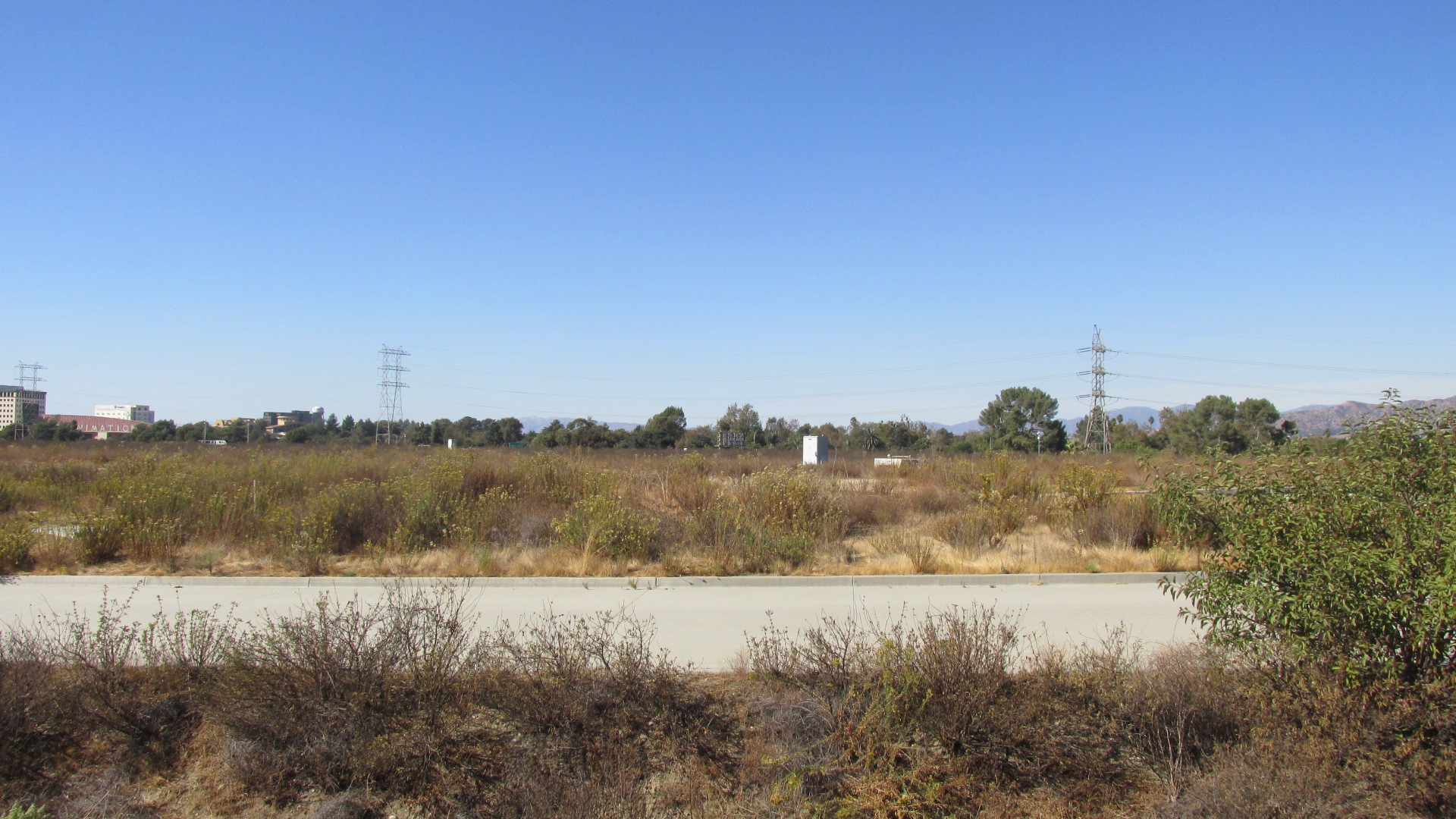
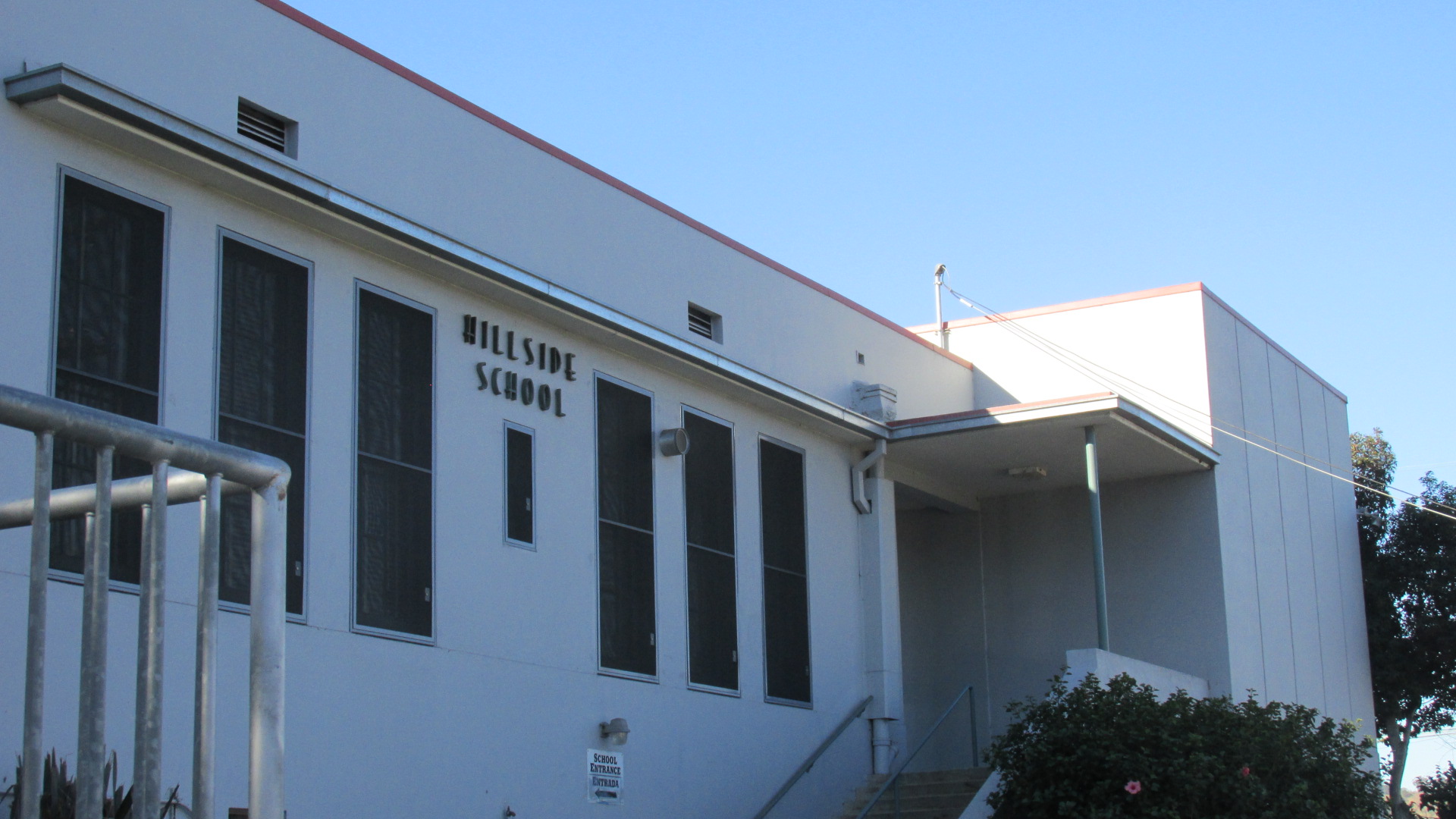
Residents of Lincoln Heights are up in arms over the plan to build a 56,700 square foot e-commerce distribution center at the intersection of Pasadena Ave. and Avenue 35. Not only is the project in close proximity to houses and apartments, it’s less than 300 feet away from Hillside Elementary. The community is understandably upset about the potential for a huge increase in truck traffic and diesel emissions.
Hillside Elementary School
At this point, though, the community is uncertain how to stop it. Xebec, the real estate firm behind the distribution center, believes that the project complies with existing zoning and doesn’t need discretionary approvals from LA City Planning. They’ve already applied for permits from LA Building & Safety. Councilmember Eunisses Hernandez, who represents Lincoln Heights, has come out against the project, and she’s proposed changes to the plan that governs the area. Unfortunately, those changes won’t be approved until December, and Xebec wants to have the permits finalized before then.
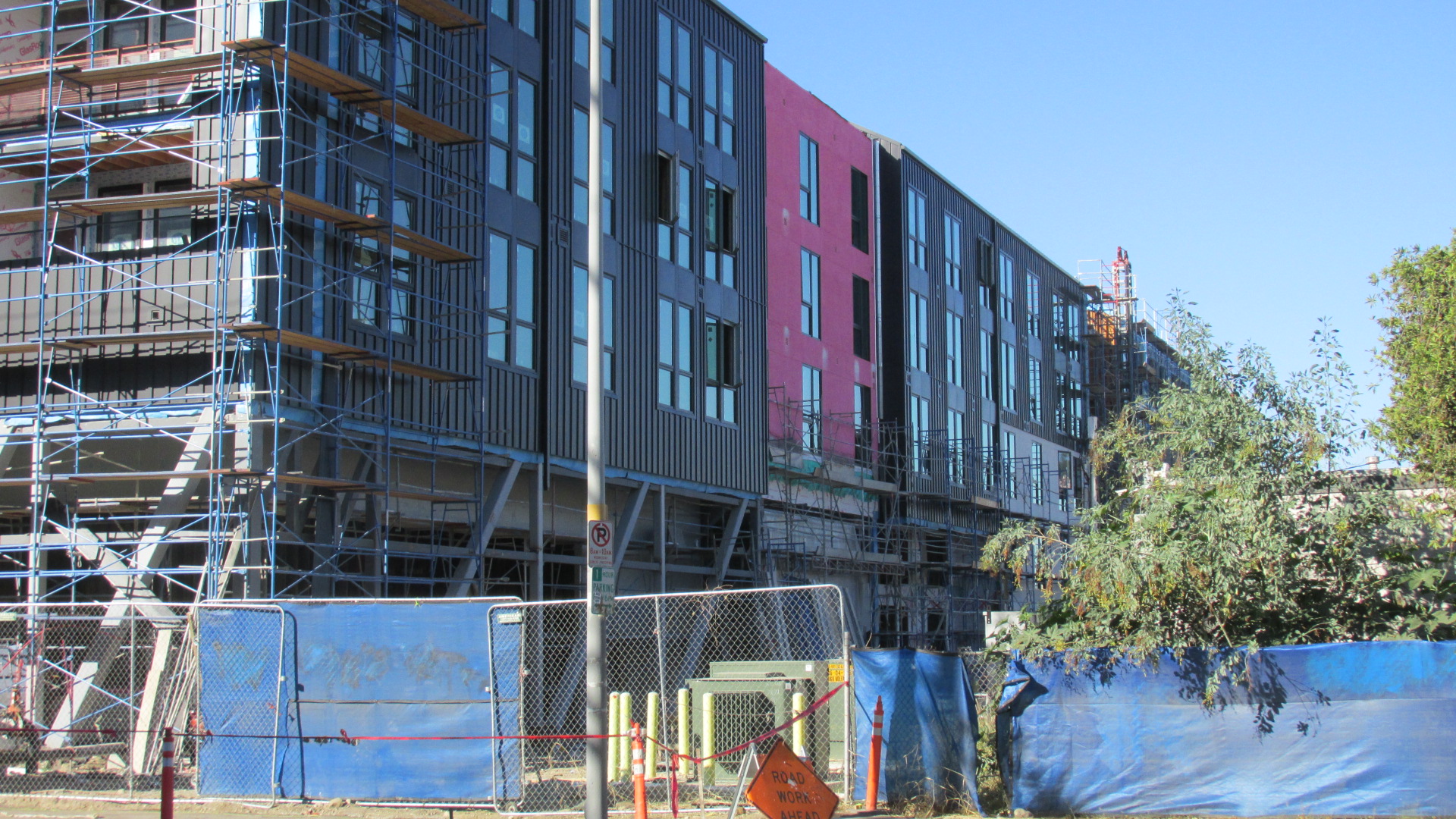
New residential building under construction right next door to 3505 Pasadena
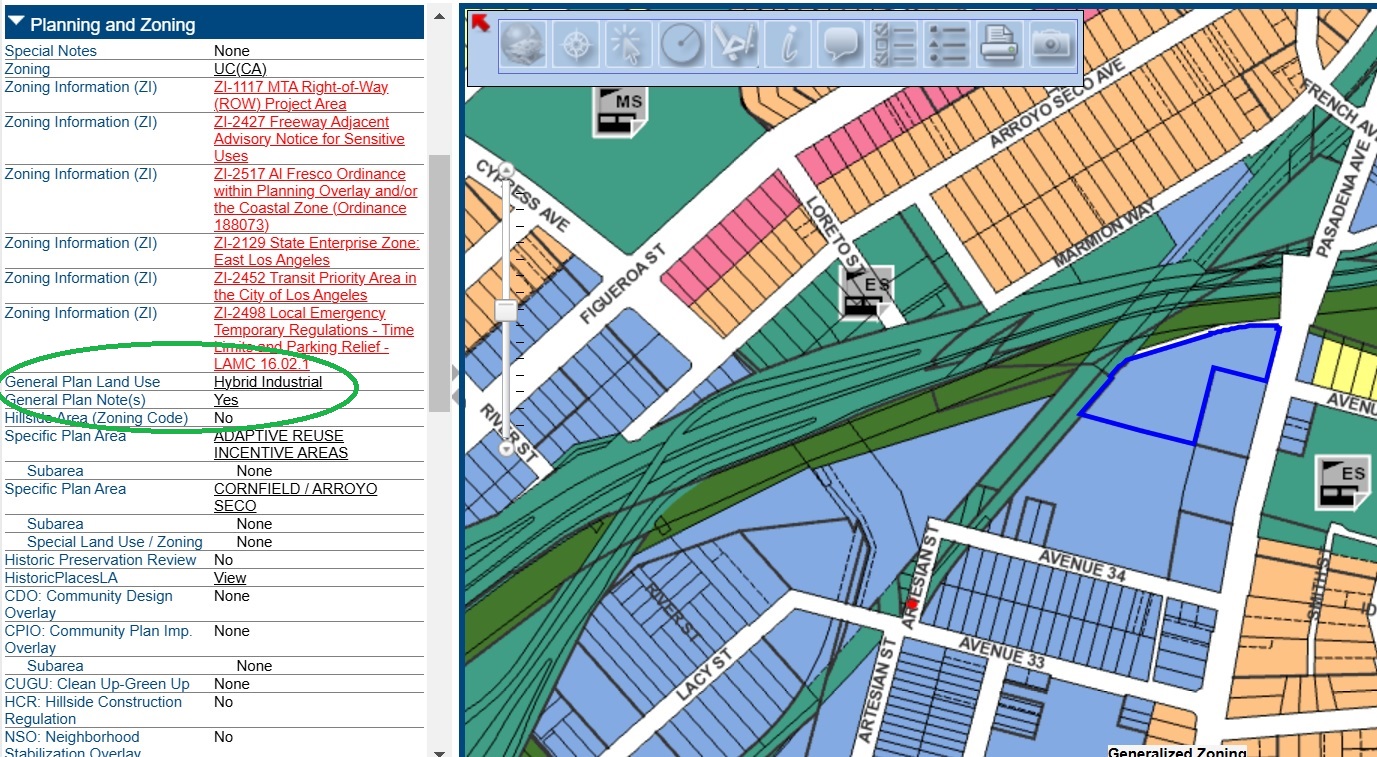
I have to admit, I have trouble understanding the zoning for 3505 Pasadena. According to ZIMAS, the General Plan Land Use designation for this parcel is Hybrid Industrial. The Hybrid Industrial designation was created by LA City Planning to allow residential uses in industrial zones. As a matter of fact, right next door to 3505 Pasadena there’s a massive new residential complex under construction that contains over 460 units. If the Hybrid Industrial designation was created to spur new housing developments in industrial areas where appropriate, the Xebec project seems to violate the whole intention of this initiative. And when those new units go on the market, how many prospective tenants are going to sign a lease when they realize they’ll be living next door to an e-commerce distribution center?
General Plan Land Use designation for 3505 Pasadena is Hybrid Industrial
But whatever the zoning is, this project should be stopped. Just ask yourself if you’d like to have diesel trucks going in and out of a distribution center right across from your home. Or better yet, ask yourself if you think elementary school kids should be breathing the toxic diesel exhaust from these trucks.
The LA City Council rep for the area is already looking for a way to stop this, but it might help to send a note to some people at the State level. If you feel like speaking up, here are the e-mail addresses for the two people who represent Lincoln Heights in Sacramento, State Senator Maria Elena Durazo and Assemblymember Miguel Santiago. I’m also including a staff member at the California Environmental Protection Agency’s Environmental Justice Program.
senator.durazo@sen.ca.gov
assemblymember.santiago@assembly.ca.gov
leticia.syslo@calepa.ca.gov
Here’s a suggested subject line.
Kids Shouldn’t Be Breathing Diesel Exhaust: Stop the Distribution Center at 3505 Pasadena
If you see problems with this project, let the folks in Sacramento know. The people of Lincoln Heights would appreciate it.











 The Horizon and the Skyline