There’s an excellent article in the August 9 issue of the LA Weekly covering recent revelations about the fault line that may run under the Millennium Hollywood site. You can follow the link below to the on-line version, but I urge you to also read the print version, which is more coherent and gives a broader picture of the situation. Reporter Gracie Zheng does a good job of sorting out the details of this depressing story, which clearly shows that campaign cash from developers is way more important to the City Council than the safety of LA’s residents.
Author Archives: cmaddren
The Devil Is in the Details
And if you’d like to see what the completed project would look like, click the link below to see proposed designs, as well as maps laying out the location of the stops. I thought some of the comments were interesting, too. A lot of people are less than thrilled with the way the stations are laid out.
As with any project of this size, there are pros and cons. Overall, I think the Regional Connector could be tremendously beneficial. But there are also potential problems, and three different groups are suing the MTA over the project. One issue is that a number of local businesses will be displaced. Even businesses that don’t have to worry about being demolished are very concerned about being able to function during construction. Many of these are family-run enterprises, and a significant loss of customers over a period of years could kill them.
I spent some time this morning checking out a number of articles on the Regional Connector, and often the comments were the most interesting part of the story. A lot of downtown residents are totally gung ho on this project. Many of them dismiss the concerns of the local businesses as though the owners are worrying over nothing. A few of the commenters are so angry about the lawsuits that they suggested a boycott of the businesses involved. I wonder how these commenters would feel if an enterprise they’d worked for years to establish was threatened with extinction.
I also wonder if the people who are so enthusiastic about this project remember the last time the city built an underground rail line. I’m referring to the construction of the Red Line, which ran way behind schedule and way over budget, and caused massive problems when they were tunnelling under Hollywood Boulevard. The street actually sank six inches during this period, and the digging also affected water lines. There was also evidence of massive corruption and sub-standard work by the contractors. Here’s a link to some of the comments posted at the LA Times during this period.
I do think the Regional Connector could be really good for LA, but we have to show a healthy skepticism about any project of this size. The picture the MTA paints makes it all sound great, but there’s a big difference between creating digital renderings and actually getting it done. Don’t forget, they’ve burned us before.
Furious
I can’t describe how angry I am over the LA City Council’s vote to approve the Millennium Hollywood project. After Caltrans contacted the city to ask why none of its concerns over traffic were addressed in the Final EIR. After the California Geological Survey wrote to say they believe an active fault line runs beneath the project area. After months of pleas from angry residents who do not want these towers. The City Council and the Mayor choose to ignore all of that and forge ahead.
It’s obvious they don’t care about the safety of Hollywood’s residents. It’s obvious they don’t care how much time LA’s citizens spend sitting in traffic. And it’s obvious they don’t care that state agencies have expressed serious reservations about this project. But their lack of concern shouldn’t surprise us, since they’ve demonstrated over and over again that their primary concern is representing the interests of developers and unions.
I think it’s time we asked the state to step in. Caltrans has said the project will seriously impact the Hollywood Freeway, making a bad situation even worse. The California Geological Survey has expressed concern about an active fault line. I think we need to contact our representatives on the State Legislature and ask them to get involved. The city has shown a total disregard for the state’s input on this project. We need to ask the State of California to take action.
A Faster Future
I am not a techie. When I started this blog what I had in mind was writing about the built environment, but more and more our cities are defined by technology. I had heard about Google possibly installing a fiber optic network in LA. This could allow area residents to download data with amazing speed, but at the moment it seems to be just speculation. Then I came across this article about Google making a deal with Austin, Texas to bring fiber optic to them.
PandoDaily – Google’s Fiber Takeover
The article makes some pretty broad claims about Google’s intentions. I was skeptical. So I sent the link to my nephew, Morgan, in Santa Cruz, who is a techie. Here’s an excerpt of what he had to say:
I’m not so sure Google is planning to takeover. They might, but only if they think they can significantly improve service. I think for them the ideal case is that the existing ISPs just upgrade their service, currently the problem is that all the ISPs have more or less realized it’s easier to just make incremental upgrades as opposed to laying new infrastructure. There’s been severe stagnation because ISPs have a lot of power. Because of that, US internet is way behind.
Google wants everyone to have high speed internet because that increases their ad revenue, but it probably doesn’t make much of a difference to them whose internet service it is. From what I’ve read, these services are likely breaking even at best, since it’s a lot more expensive for them to lay new infrastructure. Therefore, Google’s probably hoping that by threatening ISPs with this service, they’ll push them to lay new infrastructure so that Google won’t have to. If the ISPs don’t get with it, they might just end up taking over, but I doubt that’s really what they want to do.
He also sent me this link from Wired. The premise of the article is that government needs to get out of the way and let ISPs build what they want.
I don’t buy all of the author’s arguments. The idea that government should just step back and let business take over is called into question by recent history. You can look at the Enron debacle in California, where the state’s Democratic legislature let the energy giant write its own ticket. Enron proceeded to steal billions of dollars from California consumers, and there are numerous other examples of this kind of abuse. But he gives an interesting breakdown of the challenges that companies have to face when dealing with city government.
Lastly, a brief article from Maximum PC about a small town that did install its own fiber optic network and is doing quite well.
Maximum PC – Small Town Triumphs
I have no idea where all this is going. My grasp of this stuff is pretty tenuous. But it seems clear that cities, especially major cities that want to attract business, will need to create this kind of tech infrastructure if they want to be competitive. The future is here.
Lots of Hype, But No Jobs
I was checking the headlines at the LA Wave this morning, and came across an interesting story. There’s been a lot of hype about how great the Crenshaw Light Rail Line will be for the surrounding community, but I guess that doesn’t extend to providing jobs for local contractors. You can read the story by clicking here.
One aspect of the story that caught my attention is that the Young Black Contractors Association (YCBA) is planning a protest against the Los Angeles Urban League. The word is that the League has been chosen as the outreach coordinator for general contractor Walsh/Shea Corridor Constructors. The YCBA suspects that the League is going to take a few million from Walsh/Shea without making any real effort to bring local black contractors and construction workers onto the project. This is a fairly common ploy. In recent years non-profits have been starved for cash. Developers and contractors know this, so they offer a bunch of money to these groups to get their support. That way, Walsh/Shea can say, “Hey, the LA Urban League is backing us up!” Unfortunately, non-profits are sometimes willing to go along with this if they need the money badly enough. It’ll be interesting to see if the YCBA can make enough noise to bring jobs to a community where they are really needed.
Crenshaw-LAX Light Rail Line
Click to access Crenshaw-LAX_transit_corridor_map_eng.pdf
The project could give a much needed boost to the area, which the City of LA has neglected for years. Running between the Expo Line and the Green Line, it would provide an important transit link for people in the Crenshaw district and Inglewood. It could also create lots of jobs in neighborhoods where unemployment is high.
One of the key issues is safety. Most LA residents are probably aware of the problems with the Blue Line. There have been over nine hundred accidents at crossings where the trains run at street level, resulting in more than a hundred deaths. This is why many in the community are fighting to make sure this new train runs below grade in some segments. But digging tunnels would increase the cost significantly, and as far as I can tell the city hasn’t actually committed to do this for any segment of the line. The Crenshaw Subway Coalition has posted this document, which outlines their argument against grade level crossings.
The link below offers an interview with MTA Chief Art Leahy and gives a general update on the progress of the Crenshaw-LAX Line.
http://wavenewspapers.com/news/local/west_edition/article_a4586a8c-ce22-11e2-aeb8-0019bb30f31a.html
I’ve ridden public transit all my life, and I have to say that getting around LA is much easier now than it was twenty years ago. The MTA has made a lot of progress in recent years, and following a project like this you realize how difficult it can be to make things happen.
TOD? Really?
A few words about “transit oriented development” [TOD]. This is a phrase I hear a lot these days, especially from developers and city officials who want to build massive projects in congested urban areas. The other mantra they love to chant is “new urbanism”. They use these phrases like magic incantations, hoping to ward off opposition to their plans. If you question their sweeping vision for a new LA, you’re living in the past, you’re thinking small, you’re afraid to embrace the future. In reality they show little interest in the kind of careful, nuanced planning that would actually make the city a better place to live.
First, I should tell you that I don’t own a car, and I’m a great believer in public transit. Second, I can totally get behind TOD strategies when they are based on real data and a careful analysis of the local context. Often, though, developers don’t really give a damn about the facts. Often they’re only thinking about the massive amounts of money to be made if they can push their project through. And often the politicians, rather than protecting the interests of the people who elected them, are happy to fall in line because they know they’ll be richly rewarded for doing so.
The new Hollywood Community Plan is based on the premise that Los Angeles will continue to grow rapidly and that Transit Oriented Development is the only way to effectively manage the expected growth. But the truth is that this plan is based on fantasy rather than hard facts. US Census data shows that the population in the Hollywood area has not increased but has actually decreased over the last ten years. The Central Hollywood and East Hollywood areas have lost over 12,000 residents since 2000. The City Council argues that the population will rebound, but they have no data to support their assertion, and in fact they are ignoring the following facts:
1.
Population Growth in LA Is Slowing
Population growth in Los Angeles has slowed dramatically. While the city grew by leaps and bounds during the 20th century, census data shows that LA’s population has only increased by 2.65% percent since 2000. This is part of larger trend throughout California, which is expected to grow by only 1% annually in the foreseeable future. Current data seems to indicate that after a century of huge gains, California’s population growth is now levelling out.
2.
Dwindling Migration from Mexico
Immigrants are no longer coming to Los Angeles in the numbers they used to. The Mexican economy has been growing steadily for the past three years, which means many people who used to come to LA looking for work are now able to find jobs in their own country. It is a fact that immigration from Mexico to the US has slowed to almost nothing, and there is no reason to believe that this trend will be reversed in the near future. We can no longer expect a steady stream of immigrants coming from Mexico to Los Angeles.
3.
Rising Housing Costs
Higher prices for housing are driving out lower income residents. It used to be that low rents in Hollywood attracted families without a lot of money to spend. In recent years, as developers, property owners and real estate agents have pushed for gentrification, rents have skyrocketed and these families can no longer afford to live in the area. The units they used to occupy are increasingly taken over by singles and couples who make higher wages. The new Hollywood Community Plan in general, and the Millennium Hollywood project in particular, will accelerate this trend toward gentrification, ultimately causing lower population density in the Hollywood area.
4.
Fewer People, But More Traffic
The City Council has been arguing that TOD is necessary to reduce traffic, but higher density development in Hollywood hasn’t helped so far. In the past several years we’ve seen the construction of Sunset + Vine, the Redbury, the W Hotel and the Jefferson, all within easy walking distance of subway stations. But while the number of people living in Hollywood has dropped substantially, traffic has continued to get worse. I think this is because all these developments offer only high-end housing. The people who can afford to live in these buildings are also the people most likely to own cars. The people at the lower end of the economic spectrum who can’t afford cars and have to rely on public transportation are being squeezed out. Politicians and developers talk about TOD, but really their plans are causing more traffic and longer commutes.
Like I said before, I believe in TOD. I’d like to see more of it in LA. But what we’re getting now is not transit oriented development. What we’re really getting is a lot of empty hype designed to put money in developers’ pockets. The new Hollywood Community Plan and the Millennium Hollywood project were not designed to make our lives better. They were designed to make developers rich.
A Walk Around Downtown
As many people have pointed out, LA is different than most major cities. New York, Chicago, and San Francisco all have suburbs surrounding them, but people still go downtown for work, shopping, entertainment. Years ago that was also true of LA. When I was a kid my dad worked downtown, and we went there regularly for one reason or another. But over time the suburbs kept spreading farther outward, and many of them gradually became self-contained communities. There are a lot of people who live in LA who have never been downtown. What’s more, they don’t ever want to go there.
I love downtown LA. I go there often. Last month I made a couple trips downtown with a camera. What follows is a record of my ramble through the city center. So if you’re too busy or too tired or too scared to make the trip yourself, this will give you a taste of what you’re missing.
I started by taking the subway to Union Station. The photo above shows the main entrance. I was hoping to include a link with photos of the interior, but I couldn’t find a single site that did it justice. You can, however, just search for images of Union Station. There are many of them on the net. Trust me, it’s worth taking a look.
Right across from Union Station is Olvera Street. Sure, it’s a tourist trap, but it’s the coolest tourist trap I know of. You may have to fight your way through the crowd, but there are some restaurants that are worth the trouble. And it’s part of the historic core of LA. Among other things, you’ll find the Avila Adobe, the oldest building in the city.
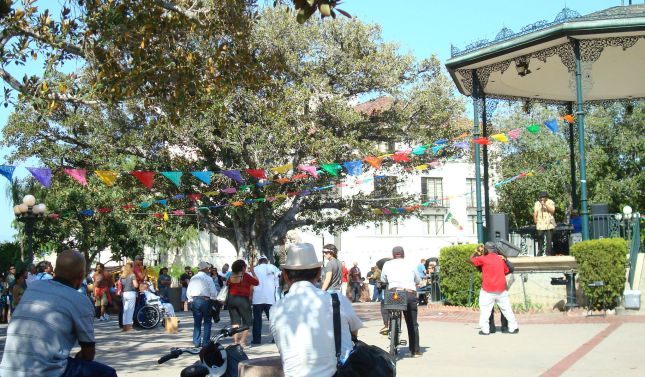
Right next door to Olvera Street is the plaza that sits at the center of El Pueblo de Los Angeles, a state historic park. The plaza is surrounded by a number buildings that date back to the nineteenth century, when this was the center of activity in the city.
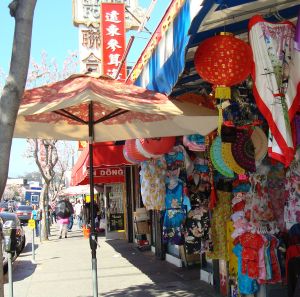
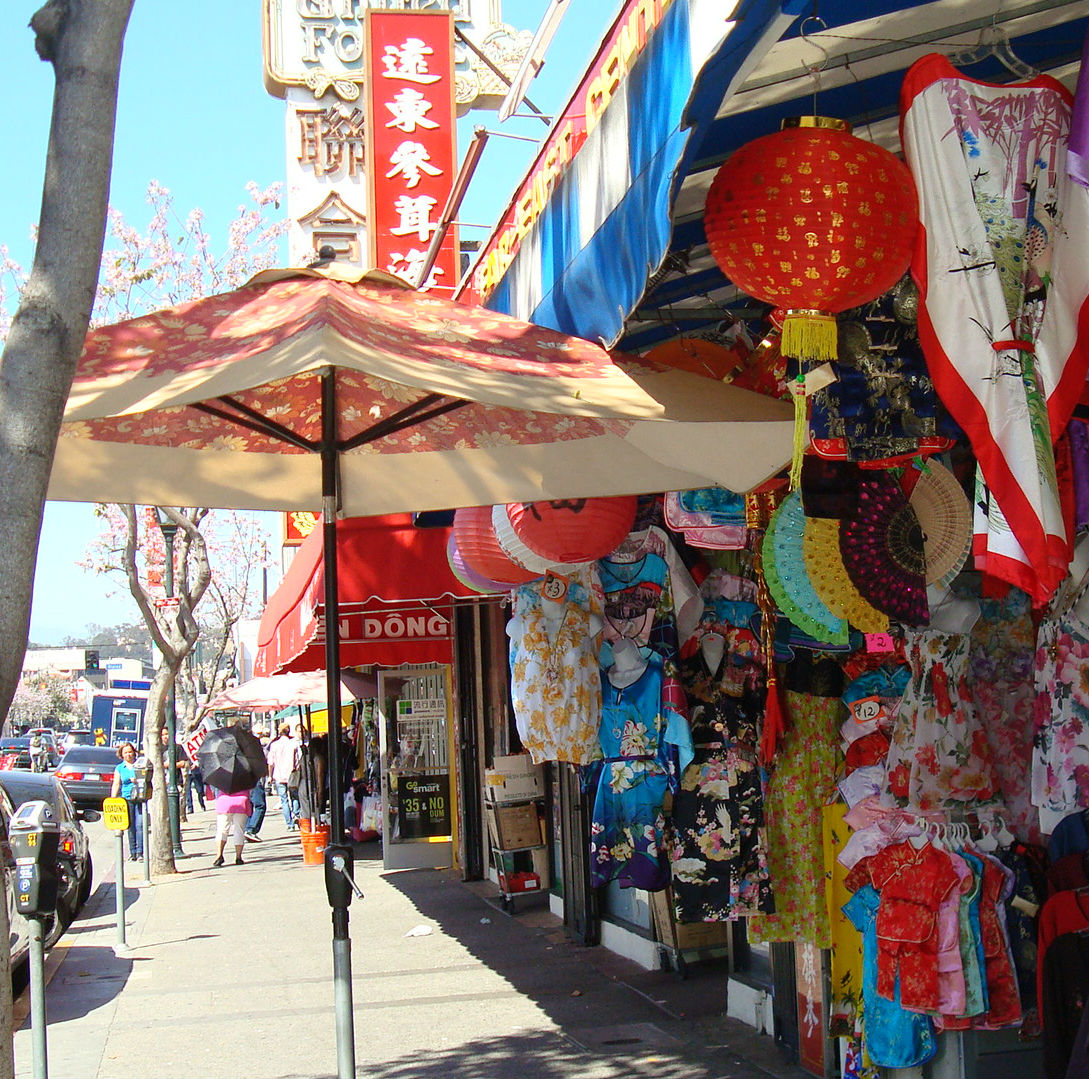
It won’t surprise you to learn that Chinatown got its name because it was home to a large Chinese community. These days, though, the name may be misleading since the area seems to be mostly drawing immigrants from Vietnam and Thailand. Now the largest Chinese communities are located in the San Gabriel Valley. Walking along Broadway, I have to say my impression was that the area is past its prime, but I see that some interesting events are taking place there in the next few months. Maybe I just caught Chinatown on a slow day.
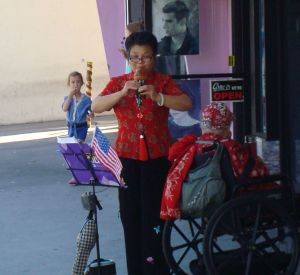
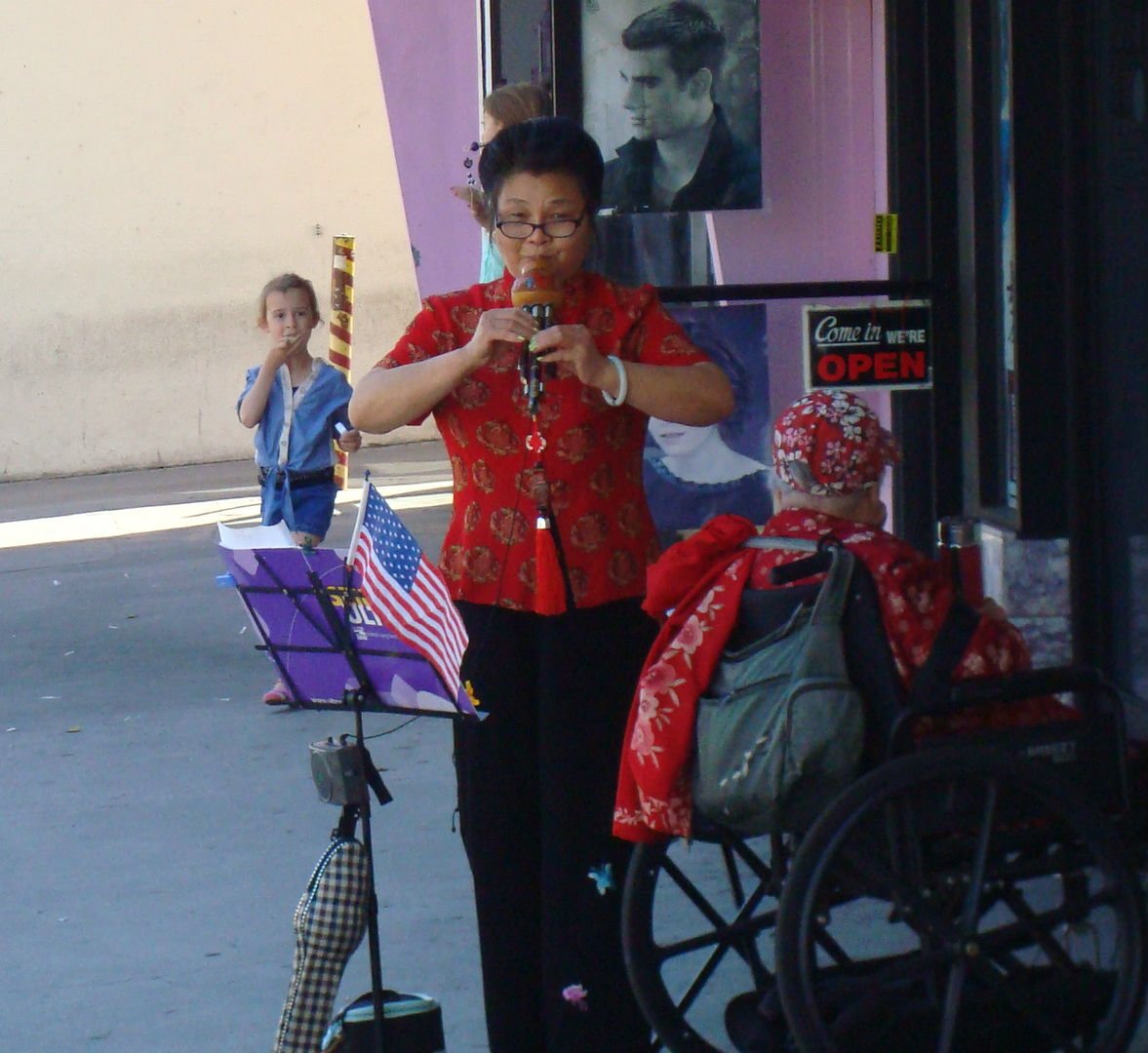
This is an image of a woman playing traditional Chinese music. I passed another street musician, an older man, singing songs that sounded like they must have come from the old country. Sadly, these people are part of a dwindling minority. My impression is that even in China traditional music is quickly being forgotten as people rush to embrace pop, rap and techno. It’s frightening how Western pop culture buries everything it can’t market. When this older generation dies off, will there be anyone left to sing the old songs?
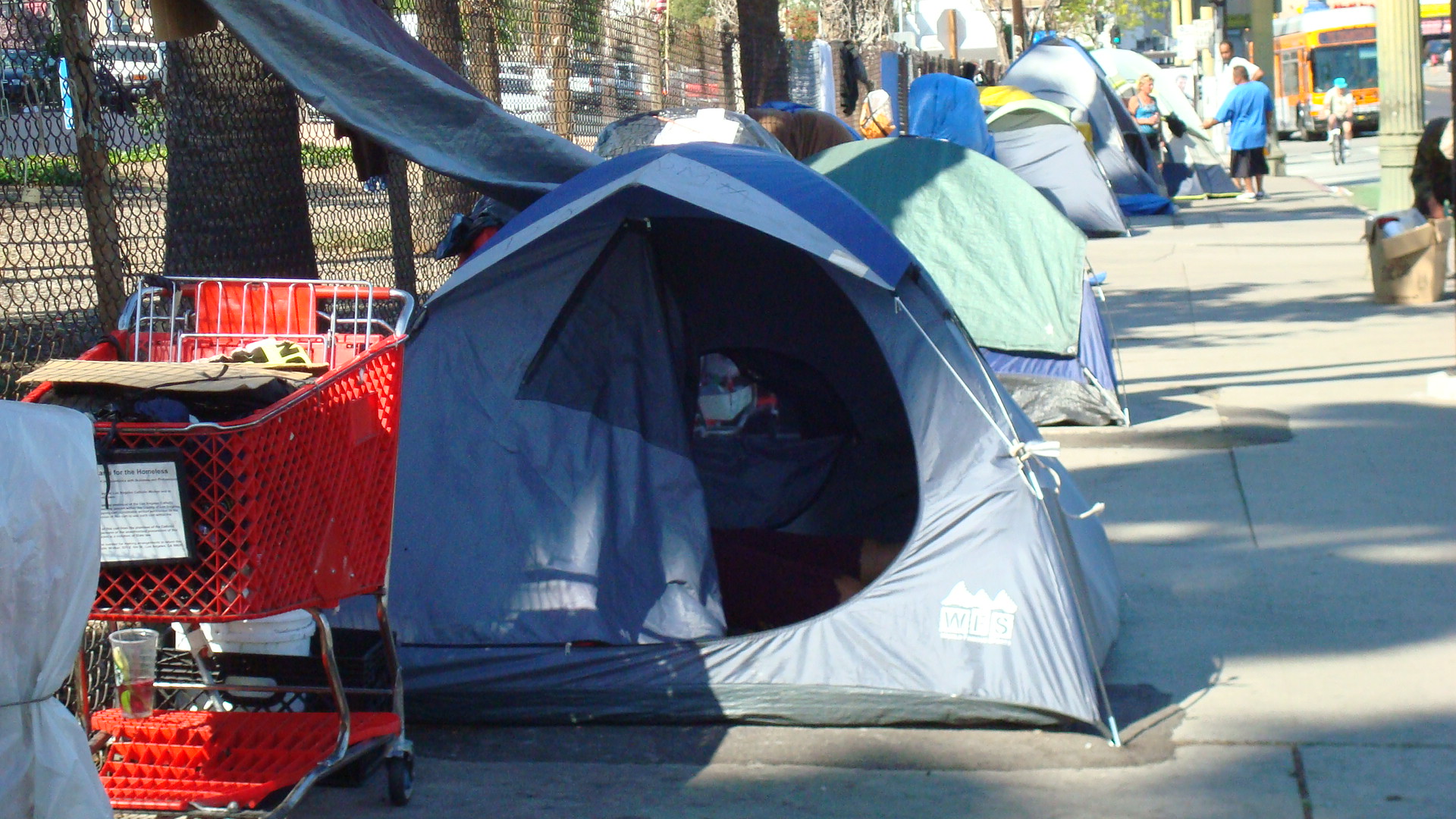
A tent settlement on Spring Street. Homelessness continues to be a problem all over LA.
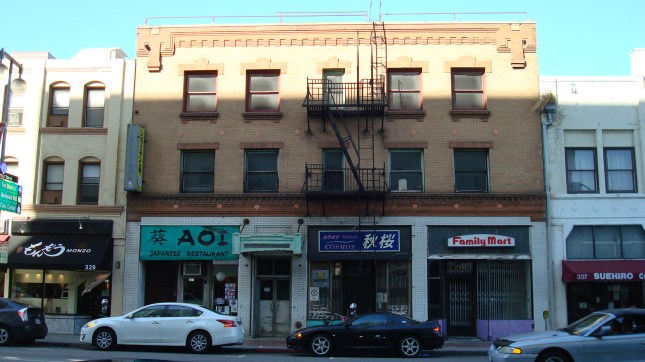
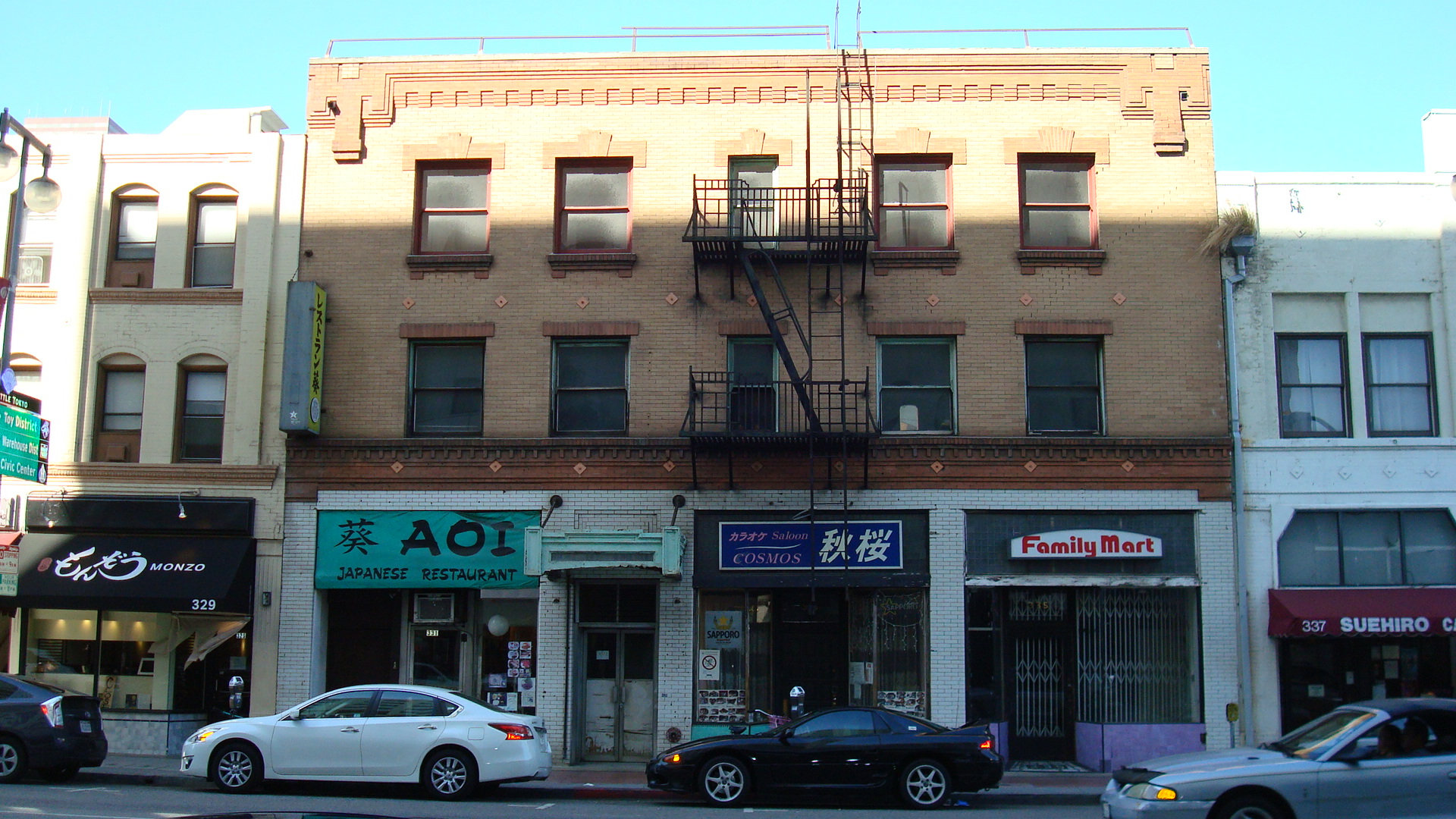
Little Tokyo is one of my favorite places to go, partly for the food, but I also just like the vibe. This is a row of shops and restaurants along First Street. And just around the corner….
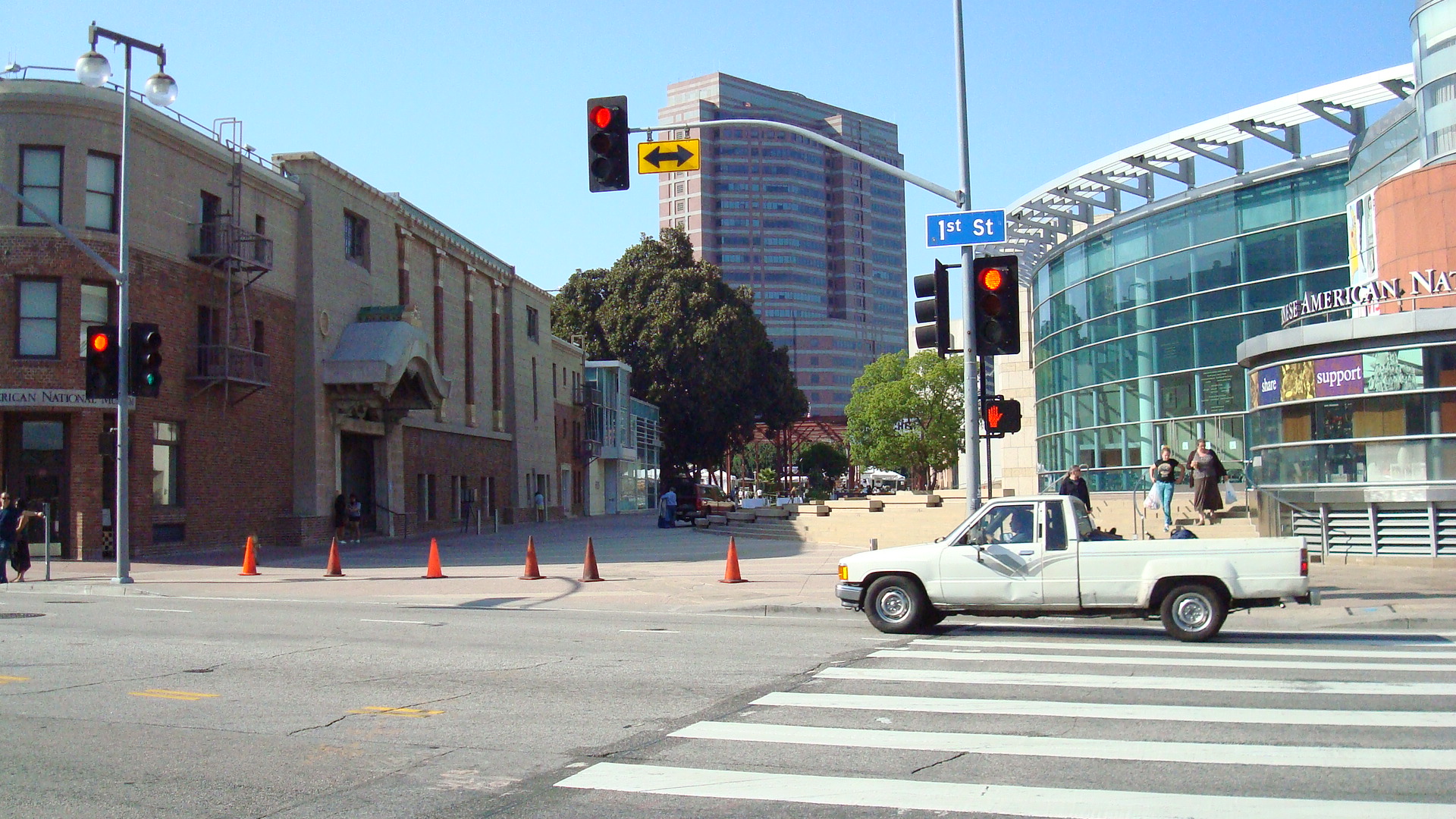
….is the Japanese American National Museum. The building on the left is the historic older building which I believe houses the museum’s offices. The newer building on the right is the exhibition space, and I have seen some very cool shows there.
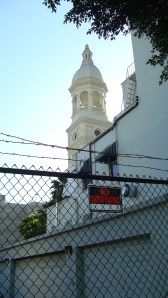
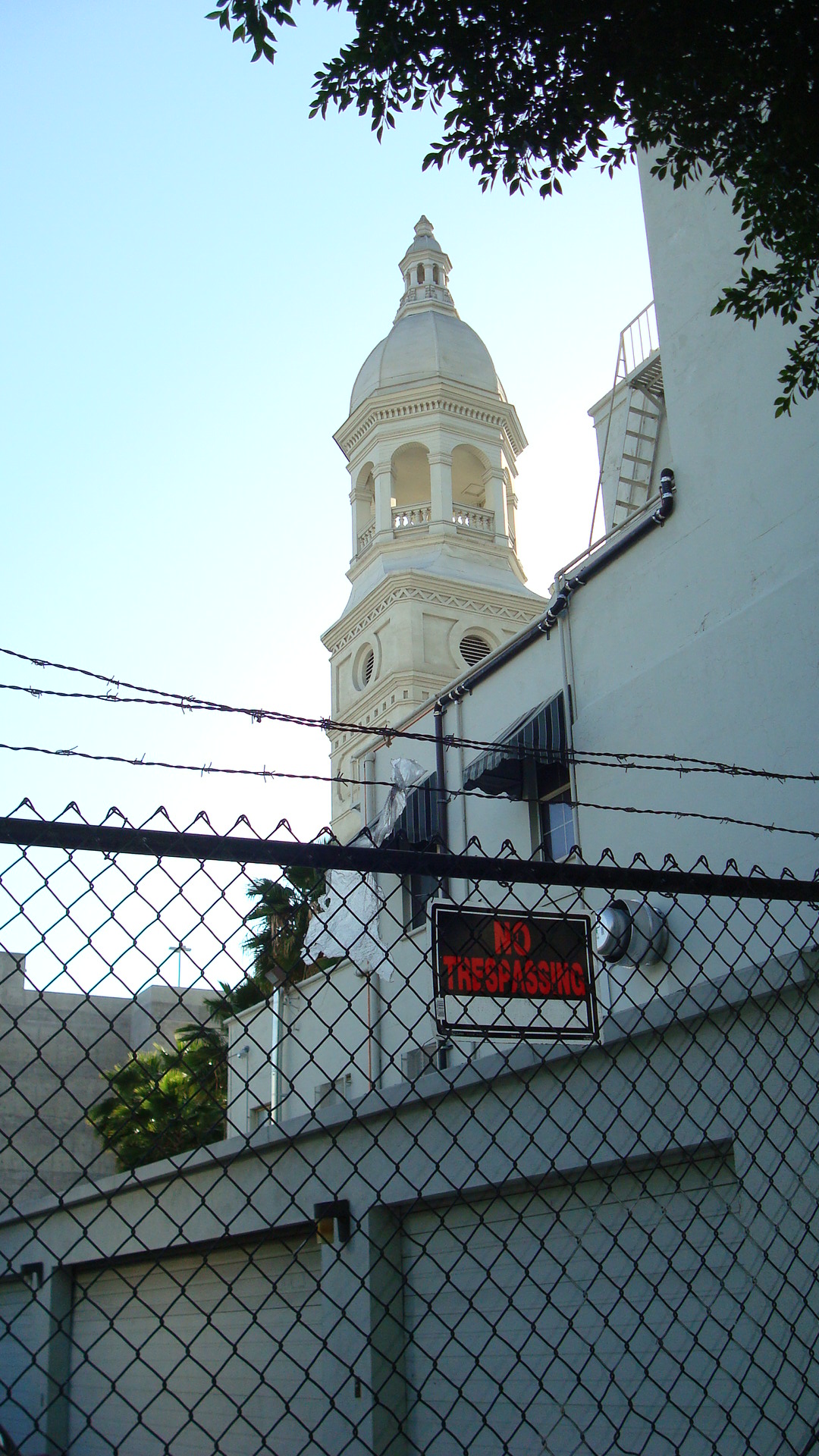
As I was walking down Second, I looked up and saw St. Vibiana. It’s one of the oldest buildings in the city, and we’re lucky it’s still standing. During the nineties, the Archdiocese made a deal with the City of LA to tear the cathedral down. The process was stopped by preservationists, who managed to get a court order which halted the demolition. Today it serves as a performing arts center and event venue.
I was walking down Broadway and passed this doorway and it caught my eye. The stairs lead up to an organization called SHARE! which provides services for people dealing with a variety of issues. I looked up their web site and found this.
SHARE! empowers people to change their own lives and provides them a loving, safe, non-judgmental place where they can find community, information and support.
Walking through some parts of downtown there is definitely a sense of desperation. While gentrification is rapidly turning some neighborhoods into upscale enclaves, just around the corner you’ll find people living in total despair. I guess happening across this stairway I felt like I’d found an unexpected message of hope.
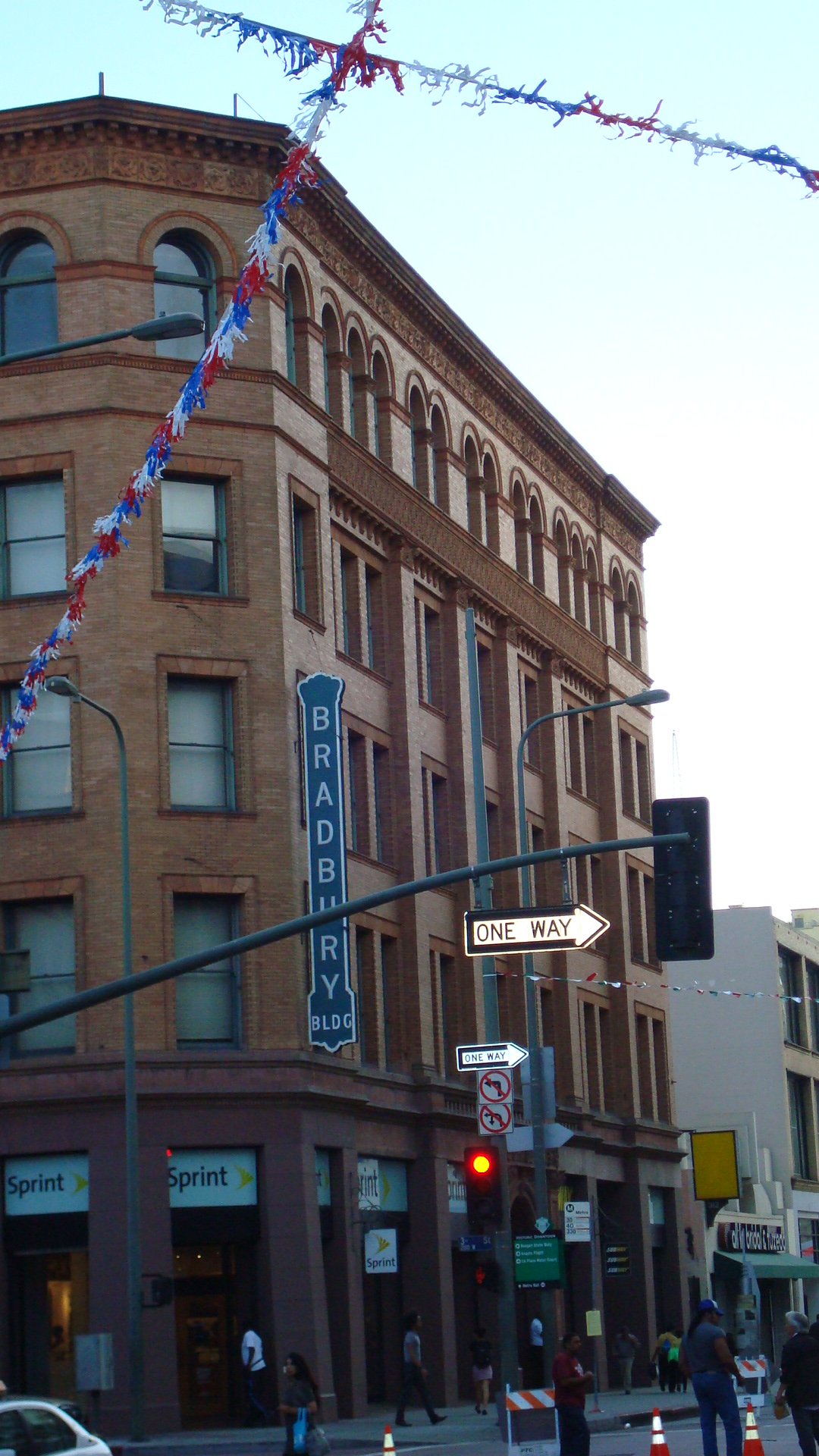
I fell in love with the Bradbury Building years ago, and I try to visit it whenever I can. It has been standing at the corner of Third and Broadway since the end of the nineteenth century. The interior is gorgeous, but unfortunately these days only people who have business with one of the tenants can go above the first floor.
The Bradbury Building was designed by George Wyman, and the story of how he got the job is pretty unusual. To learn more about how it was created, and to get a glimpse of the inside, click here.
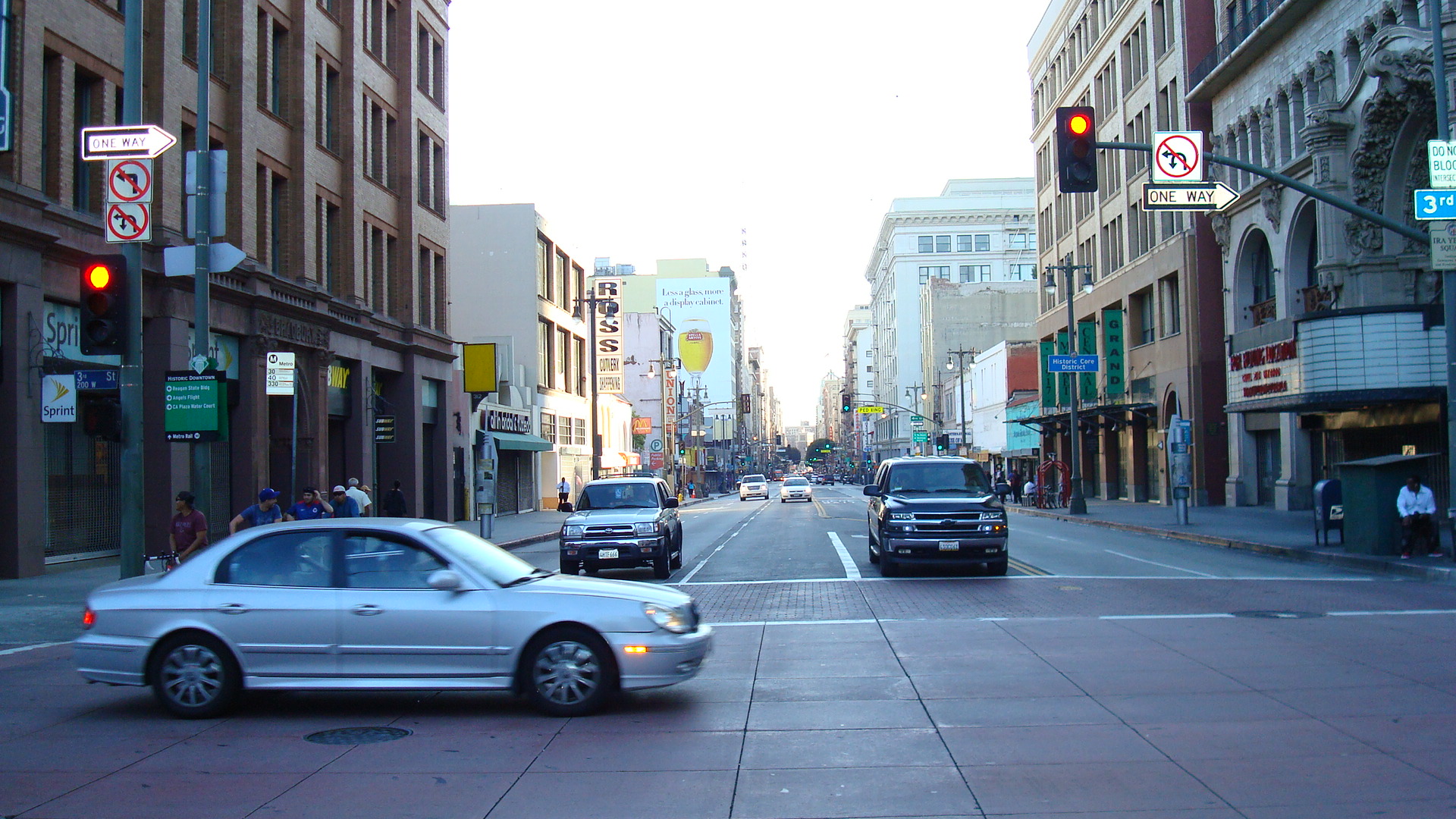
Broadway used to be the original theatre district in LA. In the photo below, the Bradbury Building is on the left, and on the right hand side you can see the Million Dollar Theater, which is where Sid Grauman set up shop when he first came to LA back in nineteen eighteen.

Grauman didn’t stay on Broadway long. In a couple of years he moved to Hollywood, where he first built the Egyptian and then the Chinese.
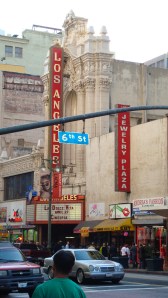
Farther down Broadway you’ll find the Los Angeles Theatre. This spectacularly gaudy movie palace was designed by S. Charles Lee, who designed many other theatres during his career. The first film to play there was City Lights. I’ve been inside only once, years ago, and I have to say it was pretty amazing. The lobby alone was worth the price of admission.
Unfortunately, it’s only open for special screenings these days, but if you get the chance I urge you to check it out. The Los Angeles Conservancy sponsors a series every summer called The Last Remaining Seats, during which they show films at some of the old movie palaces. The bad news is that this year’s screening of All About Eve at the Los Angeles Theatre is sold out. But you can check out photos of the interior on the theatre’s web site. Use the menu on the left to see images of the lobby, auditorium, etc..

This was taken at the corner of Sixth and Main. Upscale restaurants seem to be proliferating rapidly downtown.

Meanwhile there are still plenty of people who can’t even afford a cup of coffee. These folks don’t even have tents.

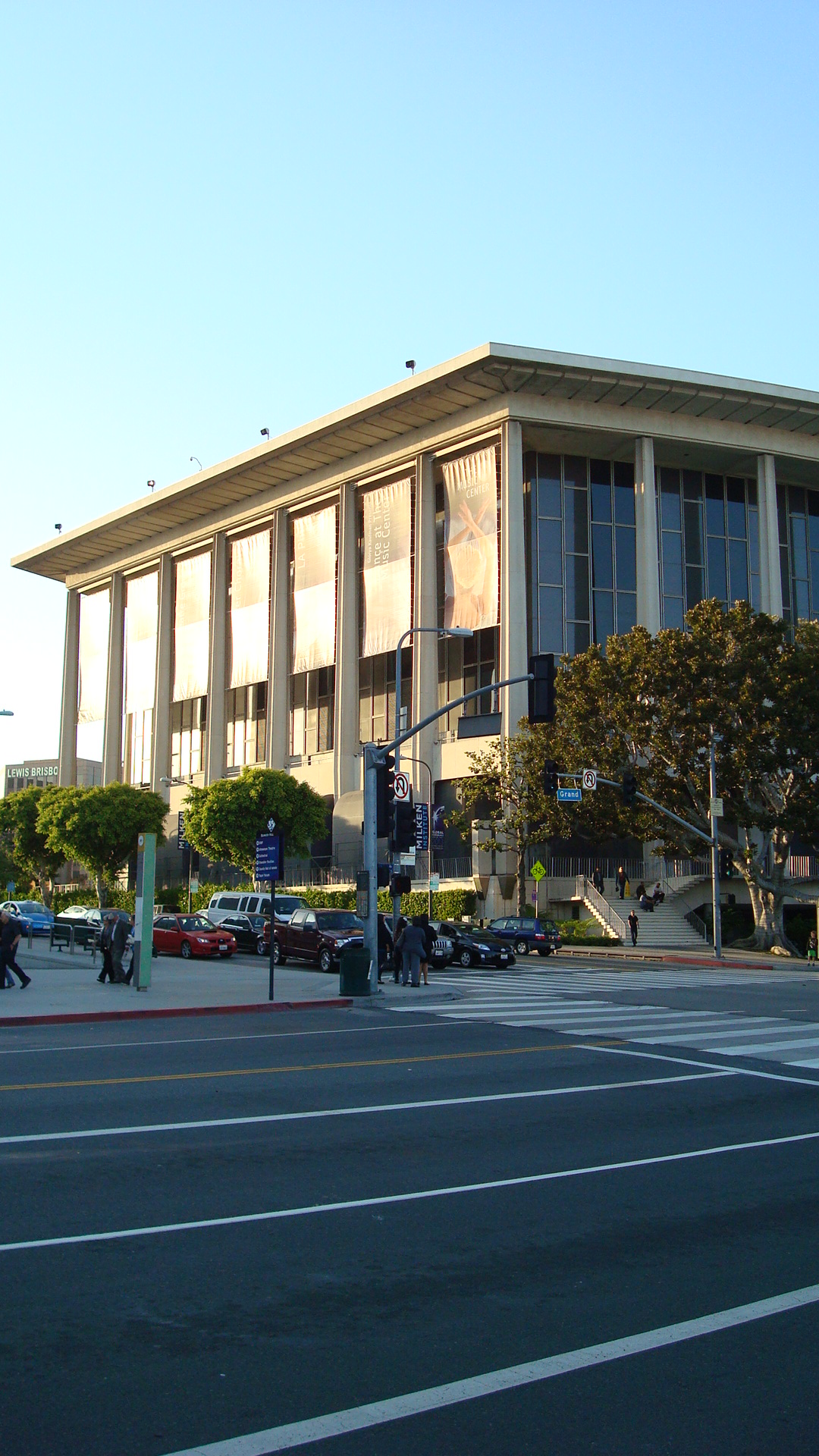
The Music Center is another mid-century classic by Welton Becket and Associates. It’s comprised of the Dorothy Chandler Pavilion, the Ahmanson Theatre and the Mark Taper Forum, and was completed in nineteen sixty seven. Becket believed in “total design”, meaning that he encouraged his clients to have the firm create not only the structure, but also furniture, carpeting, signage, dishes and flatware. Originally the Music Center did have an amazing unity of design, but in recent years there have been a number of additions to the plaza, and I feel like they’ve messed the place up. Still, the individual buildings are stunning. In nineteen ninety four, Ellerbe Becket Architects supervised some alterations to the Ahmanson, and the end result actually works pretty well.

And this is where I ended up, as it was getting close to seven pm. The western entrance to the LA Public Library. I took this photo, then got back on the subway and went home.
Hollywood Journal – Intro
As much as I enjoy ranting about greedy developers and sleazy politicians, I realize that this blog would be pretty boring if that’s all I ever wrote about. So I’m going to try to mix it up a little.
For over ten years I kept a journal about the Hollywood area. I’ll be posting excerpts here from time to time. Hopefully this will break the monotony of my ongoing diatribes against the powers that be.
A couple notes about the entry below. Those who have only known the Chinese Theatre in recent years may be puzzled by the mention of the two additional marquees. This was written at time when Mann Theatres had built two large auditoriums right next door, hoping to compete in the age of multi-plexes. These two theatres were torn down when Hollywood & Highland was constructed, and replaced by six inside the mall.
If you don’t live in the LA area, you’ll be wondering why I have a problem with Tutor-Saliba. Even back then they were notorious for cost overruns and long delays, but the city still awards them projects because they’re so well-connected. The names and faces may change, but the dynamics that shape the city stay the same.
April, Nineteen Ninety Eight
Sunday. Early afternoon. I’m sitting in a restaurant right across from the Chinese. In God’s Hands is playing at the main theatre. I look to the right and see that Tarzan and the Lost City is playing next door, and at the far end of the building is the now-familiar sign advertising the Titanic.
Beyond that, across Orchid Ave. is a construction site surrounded by a wooden barrier. The side of this barrier that runs along Hollwyood Boulevard is decorated with pink and yellow stars that have the faces of famous actors painted in the center. The Orchid Ave. side is covered with dull beige paint. And there is a sign announcing that the project is being handled by Tutor-Saliba-Perini. Good God, not again.
Beyond the construction site is the office building that stands at the corner of Hollywood and Highland. Off in the distance I can see a tall apartment complex, a billboard and a little piece of the Hollywood Hills.
*
A few days later I’m in my apartment, just a few blocks from Hollywood Boulevard. It’s after nine PM. I can hear the traffic on the Hollwyood Freeway. It’s always there, kind of like the ocean.
I’m thinking about all the stuff that’s happening in Hollywood, all the changes they’re making. There’s that big project over by the Chinese. The Max Factor building is being restored. The Cinerama Dome is gonna be sucked up into a shopping mall. It seems like the little shops and restaurants along the boulevard are doing better than they were five years ago. And I think the MTA still claims they’re gonna have a subway stop here eventually. I’m not holding my breath.
I’ve lived in or around this area for years. I really love Hollywood. Sometimes it tears my heart out when I see the things the crazy developers are doing. But then, this town wouldn’t even exist without the crazy developers.
You Can Fight City Hall
Okay. I’m in shock right now. I just read that the City Planning Commission approved the Millennium Hollywood project. I attended the meeting on Thursday, listened to the developers, the attorneys, union reps and residents talk about the project for hours. I left some time after two, feeling certain that the Commission would not approve the plan in its current form.
That shows you how naive I am. I just read the LA Times article stating that the Commission voted unanimously to approve this insane assault on the Hollywood landscape. At the meeting on Thursday I was thrilled to hear a representative from Eric Garcetti’s office say that the councilman had decided he couldn’t back the development in its current form. Now I’m thinking this was just political posturing, since Garcetti’s running for mayor and he knows how angry people are about the project.
I came up with the title for this post after I left the meeting, thinking the Commission was going to withhold approval. After reading the Times article, I debated changing it, since my initial reaction was that the city does what it wants no matter how many people show up to protest. But I believe we can still win this fight. The project has many problems, the biggest of which is that Millennium’s proposal does not actually outline what it is they’re going to build. They can’t even say how many residential units, how much office space, what kind of retail they’re proposing. They just want the city to grant them carte blanche to build whatever they want to. As many people pointed out at Thursday’s meeting, this clearly does not meet the California Environmental Quality Act’s requirements.
We’ve lost the battle, but we can still win the war. The link to the Times article is below. If you have the stomach to read it.
http://www.latimes.com/news/local/la-me-garcetti-hollywood-20130329,0,363474.story